Buy kalmykia.eu ?
We are moving the project
kalmykia.eu .
Are you interested in purchasing the domain
kalmykia.eu ?
domain@kv-gmbh.de · 0541-91531010
Buy kalmykia.eu ?
Is infrared radiation warmer than UV radiation?
No, infrared radiation is not necessarily warmer than UV radiation. The warmth of radiation depends on its intensity and the source of the radiation. Infrared radiation is often associated with warmth because it is emitted by warm objects, such as the sun or a heating element. UV radiation, on the other hand, is not typically associated with warmth, but rather with its ability to cause sunburn and damage to the skin. **
Is X-ray radiation actually radioactive radiation?
No, X-ray radiation is not actually radioactive radiation. X-rays are a form of electromagnetic radiation, similar to visible light and radio waves, and are produced by the movement of electrons in atoms. On the other hand, radioactive radiation is emitted by the decay of unstable atomic nuclei, such as in the case of radioactive elements like uranium or radium. While both types of radiation can have harmful effects on living organisms, they are fundamentally different in their origins and properties. **


Similar search terms for Radiation
Top-Angebote
Products related to Radiation:
-
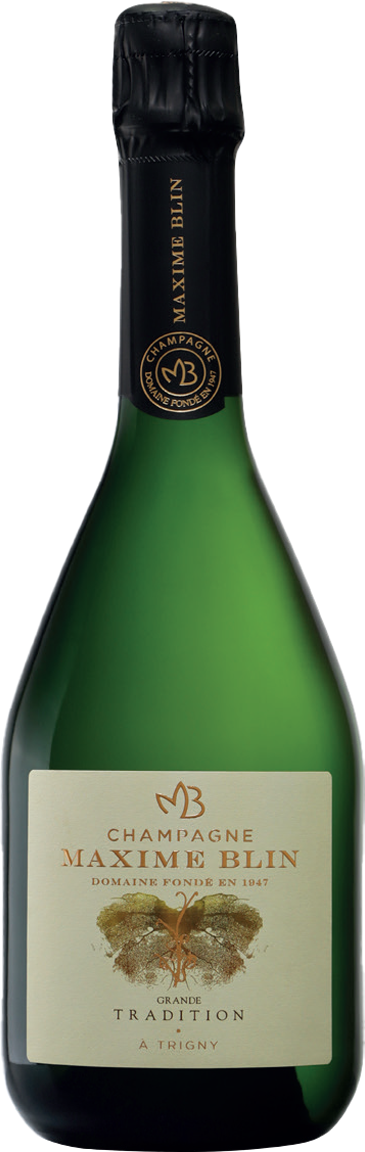
Champagne Brut 'Grande Tradition' Maxime BlinThe 'Grande Tradition' Brut Champagne from the French company Maxime Blin is a Champagne with a classic and refined style, reflecting the identity of the winery. This label is part of the 'Les Fondamentales' collection, a selection that brings together historical cuvées that fully embody the style of the Blin family, each focusing on a specific grape variety. In this particular case, the 'Grande Tradition' highlights the qualities of the Chardonnay cultivated in the Trigny area.The 'Grande Tradition' Maxime Blin Champagne comes from a blend of Chardonnay (90%) and Pinot Noir (10%) grapes grown under certified organic cultivation in the village of Trigny, within the Montagne de Reims area. Here, the vines enjoy excellent southern and south-eastern exposure and the sandy, clay-limestone soil matrix. Following the harvest, the grapes are subjected to a gentle pressing using a Coquard press, with the must thus obtained being transferred to stainless steel tanks for temperature-controlled alcoholic fermentation and subsequent complete malolactic fermentation. The vintage wine is then combined with 30% vins de réserve before bottle fermentation according to the Champenoise Method, combined with 36 months of maturation sur lattes. This is followed by dégorgement and final dosage as Extra Brut, with 4 g/l residual sugar.The 'Grande Tradition' Champagne Maxime Blin has a luminous straw yellow colour with a fine and persistent perlage. The aromatic bouquet expresses fragrant scents of citrus fruits and white flowers, surrounded by memories of bakery and mineral nuances. The taste is fresh, elegant and balanced, with a pleasant savoury trail that rests on a long citrus and mineral finish.57,00 £*Shipping: 48,00 £Secure redirect to the provider
-
Champagne Brut Grand Cru 'Tradition' GatinoisChampagne Gatinois Brut Grand Cru 'Tradition' reflects the structure and expressive depth of Champagne from Aÿ, a Grand Cru village located in the Vallée de la Marne, a few kilometres from Epernay. The village, where Pinot Noir reigns supreme with almost 90% of the entire vineyard area, is the largest of the Champagne villages with more than 4,000 inhabitants. Already famous in ancient times for the quality of its still wines, Aÿ is today established among the largest territories in all of Champagne for the cultivation of Pinot Noir.The Brut Grand Cru Champagne Gatinois 'Tradition' consists of a blend of Pinot Noir (80%) and Chardonnay (20%) grapes, varieties cultivated within the Grand Cru village of Aÿ on soils with a strong chalk component. In the cellar, the grapes undergo a soft pressing, followed by the alcoholic fermentation of the must and then the maturation of the vintage wine for a few months, which is then blended with 30% vin de reserve in the preparation of the sparkling wine base. This is followed by bottle fermentation according to the Champenoise Method, combined with at least 24-30 months of maturation on the lees in glass. This is followed by degorgement and final dosage as Brut, at 7 g/l residual sugar.The Champagne 'Tradition' Brut Grand Cru from the Gatinois sparkling wine company has a light, brilliant straw yellow colour with a refined perlage. Fresh aromas of pear, lime and white flowers emerge from the glass, supported by anelegant mineral timbre and deep hints of brioche and toasted hints. All complemented by the vinous note typical of Pinot Noir. Taste development endowed with excellent freshness and sapidity, with a good persistence in which the sensations previously perceived on the nose reappear.42,00 £*Shipping: 48,00 £Secure redirect to the provider



-
Does beta-plus radiation belong to ionizing radiation?
Yes, beta-plus radiation belongs to ionizing radiation. Beta-plus radiation consists of positrons, which are positively charged particles that have the ability to ionize atoms by knocking off electrons from their orbits. This process can lead to the formation of charged particles and free radicals, which can cause damage to biological tissues and DNA. Therefore, beta-plus radiation is considered a form of ionizing radiation due to its ability to ionize atoms and cause biological damage. **
-
Is mobile phone radiation alpha, beta, or gamma radiation?
Mobile phone radiation is not classified as alpha, beta, or gamma radiation. It is a form of non-ionizing electromagnetic radiation, specifically in the radiofrequency range. This type of radiation is emitted by mobile phones and other wireless devices, and while it is not as powerful as ionizing radiation, there is ongoing research to understand its potential health effects. **
-
How can one convert infrared radiation into microwave radiation?
One way to convert infrared radiation into microwave radiation is by using a device called a rectifying antenna, also known as a rectenna. A rectenna is a combination of an antenna and a rectifier, which can convert the incoming infrared radiation into electrical energy. This electrical energy can then be used to generate microwave radiation through a microwave generator. Another method is to use a material with nonlinear properties, such as a semiconductor, to directly convert the infrared radiation into microwave radiation through a process called harmonic generation. Both of these methods can be used to efficiently convert infrared radiation into microwave radiation for various applications. **
-
What is radiation?
Radiation is the emission of energy in the form of waves or particles. It can be found in various forms, such as electromagnetic radiation like light and radio waves, or in the form of particles like alpha, beta, and gamma radiation. Radiation can be natural, such as sunlight and cosmic rays, or man-made, like X-rays and nuclear radiation. Exposure to high levels of radiation can be harmful to living organisms, damaging cells and DNA. **


Is radiation carcinogenic?
Radiation can be carcinogenic, meaning it has the potential to cause cancer. Exposure to high levels of ionizing radiation, such as from nuclear accidents or certain medical treatments, has been linked to an increased risk of developing cancer. However, not all types of radiation are carcinogenic, and the risk of cancer from radiation exposure depends on the dose and duration of exposure. It's important to follow safety guidelines and regulations to minimize the risk of harmful radiation exposure. **
What is the difference between radioactive radiation and X-ray radiation?
Radioactive radiation is the spontaneous emission of energy from the nucleus of an unstable atom, while X-ray radiation is a form of electromagnetic radiation produced by high-energy processes. Radioactive radiation is typically emitted by radioactive materials such as uranium or radium, while X-ray radiation is produced artificially using X-ray machines. Both types of radiation can be harmful to living organisms, but X-rays are generally considered to be more controllable and less harmful than radioactive radiation. **
Top-Angebote
Products related to Radiation:
-
Uplift Picks Fluorescent Folding Hand Fan Vibrant Glow Dance Fan For Parties And Performances radiation HaloStand out and express your style with this eye catching fluorescent dance fan designed to glow with vibrant energy. Perfect for performances, parties, or themed events, it adds a bold visual element to any outfit or routine. The lightweight folding...45,00 $*Shipping: 0,00 $Secure redirect to the provider
-
Inspire Select RFID Signal Blocking Faraday Bag Set Anti Theft Car Key Shield & Radiation Proof Phone Privacy Wallet For Travel lYour privacy and security shouldnt be at risk just because youre on the move. This smart shielding solution protects your essentials from digital theft, unwanted tracking, and signal interferencegiving you peace of mind anywhere you travel. Designed...46,96 $*Shipping: 0,00 $Secure redirect to the provider
-
Is infrared radiation warmer than UV radiation?
No, infrared radiation is not necessarily warmer than UV radiation. The warmth of radiation depends on its intensity and the source of the radiation. Infrared radiation is often associated with warmth because it is emitted by warm objects, such as the sun or a heating element. UV radiation, on the other hand, is not typically associated with warmth, but rather with its ability to cause sunburn and damage to the skin. **
-
Is X-ray radiation actually radioactive radiation?
No, X-ray radiation is not actually radioactive radiation. X-rays are a form of electromagnetic radiation, similar to visible light and radio waves, and are produced by the movement of electrons in atoms. On the other hand, radioactive radiation is emitted by the decay of unstable atomic nuclei, such as in the case of radioactive elements like uranium or radium. While both types of radiation can have harmful effects on living organisms, they are fundamentally different in their origins and properties. **
-
Does beta-plus radiation belong to ionizing radiation?
Yes, beta-plus radiation belongs to ionizing radiation. Beta-plus radiation consists of positrons, which are positively charged particles that have the ability to ionize atoms by knocking off electrons from their orbits. This process can lead to the formation of charged particles and free radicals, which can cause damage to biological tissues and DNA. Therefore, beta-plus radiation is considered a form of ionizing radiation due to its ability to ionize atoms and cause biological damage. **
-
Is mobile phone radiation alpha, beta, or gamma radiation?
Mobile phone radiation is not classified as alpha, beta, or gamma radiation. It is a form of non-ionizing electromagnetic radiation, specifically in the radiofrequency range. This type of radiation is emitted by mobile phones and other wireless devices, and while it is not as powerful as ionizing radiation, there is ongoing research to understand its potential health effects. **
Similar search terms for Radiation
-
Champagne Brut 'Grande Tradition' Maxime BlinThe 'Grande Tradition' Brut Champagne from the French company Maxime Blin is a Champagne with a classic and refined style, reflecting the identity of the winery. This label is part of the 'Les Fondamentales' collection, a selection that brings together historical cuvées that fully embody the style of the Blin family, each focusing on a specific grape variety. In this particular case, the 'Grande Tradition' highlights the qualities of the Chardonnay cultivated in the Trigny area.The 'Grande Tradition' Maxime Blin Champagne comes from a blend of Chardonnay (90%) and Pinot Noir (10%) grapes grown under certified organic cultivation in the village of Trigny, within the Montagne de Reims area. Here, the vines enjoy excellent southern and south-eastern exposure and the sandy, clay-limestone soil matrix. Following the harvest, the grapes are subjected to a gentle pressing using a Coquard press, with the must thus obtained being transferred to stainless steel tanks for temperature-controlled alcoholic fermentation and subsequent complete malolactic fermentation. The vintage wine is then combined with 30% vins de réserve before bottle fermentation according to the Champenoise Method, combined with 36 months of maturation sur lattes. This is followed by dégorgement and final dosage as Extra Brut, with 4 g/l residual sugar.The 'Grande Tradition' Champagne Maxime Blin has a luminous straw yellow colour with a fine and persistent perlage. The aromatic bouquet expresses fragrant scents of citrus fruits and white flowers, surrounded by memories of bakery and mineral nuances. The taste is fresh, elegant and balanced, with a pleasant savoury trail that rests on a long citrus and mineral finish.57,00 £*Shipping: 48,00 £Secure redirect to the provider
-
Champagne Brut Grand Cru 'Tradition' GatinoisChampagne Gatinois Brut Grand Cru 'Tradition' reflects the structure and expressive depth of Champagne from Aÿ, a Grand Cru village located in the Vallée de la Marne, a few kilometres from Epernay. The village, where Pinot Noir reigns supreme with almost 90% of the entire vineyard area, is the largest of the Champagne villages with more than 4,000 inhabitants. Already famous in ancient times for the quality of its still wines, Aÿ is today established among the largest territories in all of Champagne for the cultivation of Pinot Noir.The Brut Grand Cru Champagne Gatinois 'Tradition' consists of a blend of Pinot Noir (80%) and Chardonnay (20%) grapes, varieties cultivated within the Grand Cru village of Aÿ on soils with a strong chalk component. In the cellar, the grapes undergo a soft pressing, followed by the alcoholic fermentation of the must and then the maturation of the vintage wine for a few months, which is then blended with 30% vin de reserve in the preparation of the sparkling wine base. This is followed by bottle fermentation according to the Champenoise Method, combined with at least 24-30 months of maturation on the lees in glass. This is followed by degorgement and final dosage as Brut, at 7 g/l residual sugar.The Champagne 'Tradition' Brut Grand Cru from the Gatinois sparkling wine company has a light, brilliant straw yellow colour with a refined perlage. Fresh aromas of pear, lime and white flowers emerge from the glass, supported by anelegant mineral timbre and deep hints of brioche and toasted hints. All complemented by the vinous note typical of Pinot Noir. Taste development endowed with excellent freshness and sapidity, with a good persistence in which the sensations previously perceived on the nose reappear.42,00 £*Shipping: 48,00 £Secure redirect to the provider
-
Uplift Picks Fluorescent Folding Hand Fan Vibrant Glow Dance Fan For Parties And Performances radiation CircleStand out and express your style with this eye catching fluorescent dance fan designed to glow with vibrant energy. Perfect for performances, parties, or themed events, it adds a bold visual element to any outfit or routine. The lightweight folding...45,00 $*Shipping: 0,00 $Secure redirect to the provider
-
Inspire Select RFID Signal Blocking Faraday Bag Set Anti Theft Car Key Shield & Radiation Proof Phone Privacy Wallet For Travel mYour privacy and security shouldnt be at risk just because youre on the move. This smart shielding solution protects your essentials from digital theft, unwanted tracking, and signal interferencegiving you peace of mind anywhere you travel. Designed...38,97 $*Shipping: 0,00 $Secure redirect to the provider
-
How can one convert infrared radiation into microwave radiation?
One way to convert infrared radiation into microwave radiation is by using a device called a rectifying antenna, also known as a rectenna. A rectenna is a combination of an antenna and a rectifier, which can convert the incoming infrared radiation into electrical energy. This electrical energy can then be used to generate microwave radiation through a microwave generator. Another method is to use a material with nonlinear properties, such as a semiconductor, to directly convert the infrared radiation into microwave radiation through a process called harmonic generation. Both of these methods can be used to efficiently convert infrared radiation into microwave radiation for various applications. **
-
What is radiation?
Radiation is the emission of energy in the form of waves or particles. It can be found in various forms, such as electromagnetic radiation like light and radio waves, or in the form of particles like alpha, beta, and gamma radiation. Radiation can be natural, such as sunlight and cosmic rays, or man-made, like X-rays and nuclear radiation. Exposure to high levels of radiation can be harmful to living organisms, damaging cells and DNA. **
-
Is radiation carcinogenic?
Radiation can be carcinogenic, meaning it has the potential to cause cancer. Exposure to high levels of ionizing radiation, such as from nuclear accidents or certain medical treatments, has been linked to an increased risk of developing cancer. However, not all types of radiation are carcinogenic, and the risk of cancer from radiation exposure depends on the dose and duration of exposure. It's important to follow safety guidelines and regulations to minimize the risk of harmful radiation exposure. **
-
What is the difference between radioactive radiation and X-ray radiation?
Radioactive radiation is the spontaneous emission of energy from the nucleus of an unstable atom, while X-ray radiation is a form of electromagnetic radiation produced by high-energy processes. Radioactive radiation is typically emitted by radioactive materials such as uranium or radium, while X-ray radiation is produced artificially using X-ray machines. Both types of radiation can be harmful to living organisms, but X-rays are generally considered to be more controllable and less harmful than radioactive radiation. **
* All prices are inclusive of VAT and, if applicable, plus shipping costs. The offer information is based on the details provided by the respective shop and is updated through automated processes. Real-time updates do not occur, so deviations can occur in individual cases. ** Note: Parts of this content were created by AI.