Buy kalmykia.eu ?
We are moving the project
kalmykia.eu .
Are you interested in purchasing the domain
kalmykia.eu ?
domain@kv-gmbh.de · 0541-91531010
Buy kalmykia.eu ?
Which algorithm is better for a navigation software, the brute-force algorithm or the Dijkstra algorithm?
The Dijkstra algorithm is better for a navigation software compared to the brute-force algorithm. The Dijkstra algorithm is specifically designed for finding the shortest path in a graph, making it well-suited for navigation purposes. It efficiently calculates the shortest path from a starting point to all other points in the graph, which is essential for navigation software. On the other hand, the brute-force algorithm is not optimized for finding the shortest path and can be inefficient for large graphs, making it less suitable for navigation software. **
What is Instagram's algorithm?
Instagram's algorithm is a complex system that determines the order in which posts appear on a user's feed. It takes into account various factors such as the user's interests, interactions, and relationships with other users. The algorithm prioritizes content that it believes the user will find most engaging, based on their past behavior on the platform. This means that not all posts from accounts a user follows will show up in their feed, as the algorithm aims to show the most relevant and interesting content to each individual user. **


Similar search terms for Algorithm
Top-Angebote
Products related to Algorithm:
-
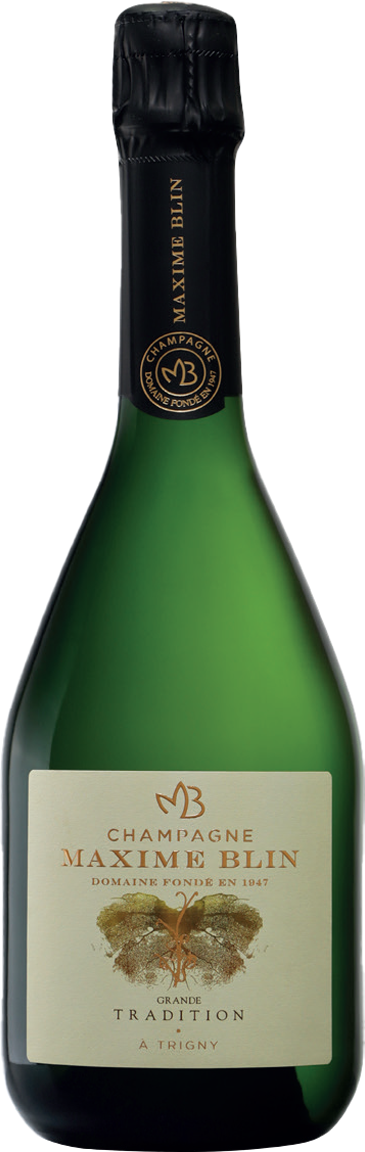
Champagne Brut 'Grande Tradition' Maxime BlinThe 'Grande Tradition' Brut Champagne from the French company Maxime Blin is a Champagne with a classic and refined style, reflecting the identity of the winery. This label is part of the 'Les Fondamentales' collection, a selection that brings together historical cuvées that fully embody the style of the Blin family, each focusing on a specific grape variety. In this particular case, the 'Grande Tradition' highlights the qualities of the Chardonnay cultivated in the Trigny area.The 'Grande Tradition' Maxime Blin Champagne comes from a blend of Chardonnay (90%) and Pinot Noir (10%) grapes grown under certified organic cultivation in the village of Trigny, within the Montagne de Reims area. Here, the vines enjoy excellent southern and south-eastern exposure and the sandy, clay-limestone soil matrix. Following the harvest, the grapes are subjected to a gentle pressing using a Coquard press, with the must thus obtained being transferred to stainless steel tanks for temperature-controlled alcoholic fermentation and subsequent complete malolactic fermentation. The vintage wine is then combined with 30% vins de réserve before bottle fermentation according to the Champenoise Method, combined with 36 months of maturation sur lattes. This is followed by dégorgement and final dosage as Extra Brut, with 4 g/l residual sugar.The 'Grande Tradition' Champagne Maxime Blin has a luminous straw yellow colour with a fine and persistent perlage. The aromatic bouquet expresses fragrant scents of citrus fruits and white flowers, surrounded by memories of bakery and mineral nuances. The taste is fresh, elegant and balanced, with a pleasant savoury trail that rests on a long citrus and mineral finish.57,00 £*Shipping: 48,00 £Secure redirect to the provider
-
Champagne Brut Grand Cru 'Tradition' GatinoisChampagne Gatinois Brut Grand Cru 'Tradition' reflects the structure and expressive depth of Champagne from Aÿ, a Grand Cru village located in the Vallée de la Marne, a few kilometres from Epernay. The village, where Pinot Noir reigns supreme with almost 90% of the entire vineyard area, is the largest of the Champagne villages with more than 4,000 inhabitants. Already famous in ancient times for the quality of its still wines, Aÿ is today established among the largest territories in all of Champagne for the cultivation of Pinot Noir.The Brut Grand Cru Champagne Gatinois 'Tradition' consists of a blend of Pinot Noir (80%) and Chardonnay (20%) grapes, varieties cultivated within the Grand Cru village of Aÿ on soils with a strong chalk component. In the cellar, the grapes undergo a soft pressing, followed by the alcoholic fermentation of the must and then the maturation of the vintage wine for a few months, which is then blended with 30% vin de reserve in the preparation of the sparkling wine base. This is followed by bottle fermentation according to the Champenoise Method, combined with at least 24-30 months of maturation on the lees in glass. This is followed by degorgement and final dosage as Brut, at 7 g/l residual sugar.The Champagne 'Tradition' Brut Grand Cru from the Gatinois sparkling wine company has a light, brilliant straw yellow colour with a refined perlage. Fresh aromas of pear, lime and white flowers emerge from the glass, supported by anelegant mineral timbre and deep hints of brioche and toasted hints. All complemented by the vinous note typical of Pinot Noir. Taste development endowed with excellent freshness and sapidity, with a good persistence in which the sensations previously perceived on the nose reappear.42,00 £*Shipping: 48,00 £Secure redirect to the provider



-
What is an algorithm?
An algorithm is a step-by-step procedure or set of rules to be followed in problem-solving or decision-making. It is a finite sequence of well-defined, computer-implementable instructions typically used to solve a specific problem or perform a specific task. Algorithms are used in various fields such as computer science, mathematics, and engineering to automate processes and achieve desired outcomes efficiently. They are essential in programming and data analysis to manipulate and process data effectively. **
-
What is the bubblesort algorithm?
The bubblesort algorithm is a simple sorting algorithm that repeatedly steps through the list to be sorted, compares each pair of adjacent items, and swaps them if they are in the wrong order. This process is repeated until the list is sorted. The algorithm gets its name because smaller elements "bubble" to the top of the list with each iteration. While bubblesort is easy to understand and implement, it is not very efficient for large lists as it has a time complexity of O(n^2). **
-
What is the Snapchat algorithm?
The Snapchat algorithm is a complex system that determines the content users see on their feed based on their interactions and preferences. It analyzes factors such as who users interact with the most, what type of content they engage with, and how often they use the app. The algorithm then tailors the content to each user's interests, making the user experience more personalized. This algorithm is constantly evolving to provide the most relevant and engaging content to users. **
-
What is sorting algorithm 2?
Sorting algorithm 2 refers to a specific type of algorithm used to rearrange a list of items into a specific order. There are various types of sorting algorithms, such as bubble sort, merge sort, and quick sort, each with its own unique approach to sorting data. Sorting algorithm 2 could refer to any specific sorting algorithm depending on the context in which it is being discussed. **


What is a colloquial algorithm?
A colloquial algorithm is a step-by-step procedure or set of rules that is described in everyday language, rather than in formal mathematical or technical terms. It is typically used to explain a process or problem-solving method in a more accessible and understandable way for non-experts. Colloquial algorithms are often used in educational settings or in informal discussions to break down complex concepts into simpler, more relatable terms. **
What is the Gauss algorithm?
The Gauss algorithm, also known as Gaussian elimination, is a method used to solve systems of linear equations. It involves transforming the system of equations into an equivalent upper triangular form by using elementary row operations, such as adding a multiple of one equation to another or swapping two equations. Once the system is in upper triangular form, the solutions can be easily obtained by back substitution. This algorithm is widely used in various fields such as engineering, physics, and computer science for solving systems of linear equations. **
Top-Angebote
Products related to Algorithm:
-
The Master Algorithm by Pedro Domingos - Non Fiction - PaperbackTitle:. The Master Algorithm: How the Quest for the Ultimate Learning Machine Will Remake Our World Condition: BRAND NEW. Format: Paperback Overview:. The Master Algorithm is a fearless, lucid tour through the future-shaping world of machine learning. Pedro Domingos, a renowned computer scientist, guides readers across five competing schools of thought—symbolists, connectionists, evolutionaries, Bayesians, and analogizers—revealing how each approach teaches machines to learn from data. The book isn’t a dry treatise on algorithms; it’s a narrative about how learning from data could unlock unprecedented insights, from personalised medicine and smarter search to fraud detection and climate modeling. With approachable explanations, real-world examples, and vivid analogies, Domingos shows why a universal “master algorithm” might someday synthesize these diverse methods into a single, powerful framework. The Master Algorithm demystifies what is happening behind the screens that shape everyday life, making complex ideas accessible without sacrificing rigour. It’s a compelling invitation to readers curious about artificial intelligence, data science, and the profound ways our world is being rewritten by intelligent machines. What Makes This Book Stand Out:. What makes The Master Algorithm stand out is its rare ability to translate deep, tech-heavy concepts into a narrative that’s engaging for a non-specialist while still satisfying for practitioners. Domingos presents five distinct families of learning—each with its own strengths, limitations, and practical applications—before arguing for the long-sought synthesis: a unified approach to learning from data. The book blends big-picture philosophy with concrete examples, from search engines to medical diagnosis, showing how algorithms actually affect decisions, jobs, privacy, and ethics. It also offers a historical sweep of AI’s evolution, helping readers understand where the field has come from and where it could go next. This isn’t just a survey; it’s a thought-provoking framework for considering how society can steer technology for the greater good. Who This Book Is Perfect For:. Ideal for curious readers who want to understand what fuels the AI-powered world, as well as students, professionals, and decision-makers navigating a data-driven era. It suits non-technical readers seeking a solid grounding in machine learning, educators looking for clear explanations to share with others, and business leaders who want to grasp how predictive models influence strategy. Anyone fascinated by artificial intelligence, data science, or the promise—and perils—of automation will find The Master Algorithm both accessible and indispensable. It also serves as a thoughtful gift for graduates, researchers, and tech enthusiasts seeking a broad, informed perspective on how learning machines will shape our future. Key Highlights:. Clear explanation of the five main families of machine learning: symbolists, connectionists,...9,99 £*Shipping: 2,99 £Secure redirect to the provider
-
Steven S S. Skiena The Algorithm Design Manual by Steven Skiena - Non Fiction - PaperbackTitle:. The Algorithm Design Manual Condition: BRAND NEW. Format: Paperback Overview:. Expanding on the enduring success of the first edition, this paperback edition remains the definitive, practical guide to algorithm design for students and professional developers alike. It bridges the gap between theory and real-world application, offering a thoughtful, design-first approach to solving computational problems. The book guides you from problem framing and constraint analysis to the careful selection of algorithms that balance speed, accuracy, and simplicity. Rather than presenting algorithms in isolation, it emphasizes a disciplined workflow: identify the core challenge, map it to a proven pattern, evaluate trade-offs, and implement with clarity and robustness. Readers will discover a well-structured catalog of algorithmic strategies, each accompanied by concrete examples, heuristics, and actionable guidance that translates into faster, more reliable software. Ideal for upper-level computer science courses and engineering teams alike, it empowers practitioners to reason about complexity without getting lost in notation. Whether you’re brushing up for a course, preparing for technical interviews, or architecting scalable systems, this manual remains a trusted companion for turning difficult problems into elegant, efficient solutions. What Makes This Book Stand Out:. This manual stands out for its practical, design-oriented philosophy. It treats algorithms as problem-solvers’ tools rather than abstract recipes, teaching you how to choose the right approach based on data characteristics, performance requirements, and real-world constraints. The book combines clear explanations with a realistic emphasis on engineering trade-offs, providing a reliable framework for evaluating different strategies and implementing them with confidence. Its structured layout—featuring a curated library of algorithmic patterns, real-world case concepts, and practical exercises—helps readers apply theory to tangible coding challenges. The emphasis on readability, reuse, and maintainable design makes it especially valuable for developers who design systems under time pressure and for students who crave a storytelling approach to complex ideas. In short, it equips you to design smarter, faster, and more scalable solutions from day one. Who This Book Is Perfect For:. Ideal for undergraduate and graduate computer science students seeking a practical grounding in algorithm design, as well as software engineers shaping robust, high-performance systems. It also serves as a reliable reference for developers preparing for technical interviews, educators building curricula, and teams needing a standard text that clearly connects theory to real-world coding. If you aim to translate mathematical insight into working software, or you want to deepen your understanding of how and why certain algorithms perform in practice, this book is a durable companion. From newcomers to seasoned...99,99 £*Shipping: 0,00 £Secure redirect to the provider
-
Which algorithm is better for a navigation software, the brute-force algorithm or the Dijkstra algorithm?
The Dijkstra algorithm is better for a navigation software compared to the brute-force algorithm. The Dijkstra algorithm is specifically designed for finding the shortest path in a graph, making it well-suited for navigation purposes. It efficiently calculates the shortest path from a starting point to all other points in the graph, which is essential for navigation software. On the other hand, the brute-force algorithm is not optimized for finding the shortest path and can be inefficient for large graphs, making it less suitable for navigation software. **
-
What is Instagram's algorithm?
Instagram's algorithm is a complex system that determines the order in which posts appear on a user's feed. It takes into account various factors such as the user's interests, interactions, and relationships with other users. The algorithm prioritizes content that it believes the user will find most engaging, based on their past behavior on the platform. This means that not all posts from accounts a user follows will show up in their feed, as the algorithm aims to show the most relevant and interesting content to each individual user. **
-
What is an algorithm?
An algorithm is a step-by-step procedure or set of rules to be followed in problem-solving or decision-making. It is a finite sequence of well-defined, computer-implementable instructions typically used to solve a specific problem or perform a specific task. Algorithms are used in various fields such as computer science, mathematics, and engineering to automate processes and achieve desired outcomes efficiently. They are essential in programming and data analysis to manipulate and process data effectively. **
-
What is the bubblesort algorithm?
The bubblesort algorithm is a simple sorting algorithm that repeatedly steps through the list to be sorted, compares each pair of adjacent items, and swaps them if they are in the wrong order. This process is repeated until the list is sorted. The algorithm gets its name because smaller elements "bubble" to the top of the list with each iteration. While bubblesort is easy to understand and implement, it is not very efficient for large lists as it has a time complexity of O(n^2). **
Similar search terms for Algorithm
-
Champagne Brut 'Grande Tradition' Maxime BlinThe 'Grande Tradition' Brut Champagne from the French company Maxime Blin is a Champagne with a classic and refined style, reflecting the identity of the winery. This label is part of the 'Les Fondamentales' collection, a selection that brings together historical cuvées that fully embody the style of the Blin family, each focusing on a specific grape variety. In this particular case, the 'Grande Tradition' highlights the qualities of the Chardonnay cultivated in the Trigny area.The 'Grande Tradition' Maxime Blin Champagne comes from a blend of Chardonnay (90%) and Pinot Noir (10%) grapes grown under certified organic cultivation in the village of Trigny, within the Montagne de Reims area. Here, the vines enjoy excellent southern and south-eastern exposure and the sandy, clay-limestone soil matrix. Following the harvest, the grapes are subjected to a gentle pressing using a Coquard press, with the must thus obtained being transferred to stainless steel tanks for temperature-controlled alcoholic fermentation and subsequent complete malolactic fermentation. The vintage wine is then combined with 30% vins de réserve before bottle fermentation according to the Champenoise Method, combined with 36 months of maturation sur lattes. This is followed by dégorgement and final dosage as Extra Brut, with 4 g/l residual sugar.The 'Grande Tradition' Champagne Maxime Blin has a luminous straw yellow colour with a fine and persistent perlage. The aromatic bouquet expresses fragrant scents of citrus fruits and white flowers, surrounded by memories of bakery and mineral nuances. The taste is fresh, elegant and balanced, with a pleasant savoury trail that rests on a long citrus and mineral finish.57,00 £*Shipping: 48,00 £Secure redirect to the provider
-
Champagne Brut Grand Cru 'Tradition' GatinoisChampagne Gatinois Brut Grand Cru 'Tradition' reflects the structure and expressive depth of Champagne from Aÿ, a Grand Cru village located in the Vallée de la Marne, a few kilometres from Epernay. The village, where Pinot Noir reigns supreme with almost 90% of the entire vineyard area, is the largest of the Champagne villages with more than 4,000 inhabitants. Already famous in ancient times for the quality of its still wines, Aÿ is today established among the largest territories in all of Champagne for the cultivation of Pinot Noir.The Brut Grand Cru Champagne Gatinois 'Tradition' consists of a blend of Pinot Noir (80%) and Chardonnay (20%) grapes, varieties cultivated within the Grand Cru village of Aÿ on soils with a strong chalk component. In the cellar, the grapes undergo a soft pressing, followed by the alcoholic fermentation of the must and then the maturation of the vintage wine for a few months, which is then blended with 30% vin de reserve in the preparation of the sparkling wine base. This is followed by bottle fermentation according to the Champenoise Method, combined with at least 24-30 months of maturation on the lees in glass. This is followed by degorgement and final dosage as Brut, at 7 g/l residual sugar.The Champagne 'Tradition' Brut Grand Cru from the Gatinois sparkling wine company has a light, brilliant straw yellow colour with a refined perlage. Fresh aromas of pear, lime and white flowers emerge from the glass, supported by anelegant mineral timbre and deep hints of brioche and toasted hints. All complemented by the vinous note typical of Pinot Noir. Taste development endowed with excellent freshness and sapidity, with a good persistence in which the sensations previously perceived on the nose reappear.42,00 £*Shipping: 48,00 £Secure redirect to the provider
-
Les Jardins LED path light Tradition Sensor Corten 90cm Tradition, dimmable, Brown / rust, Aluminium, Modern, outdoor solar lightsThe LED path light Tradition made of aluminum shows a modern cuboid shape and rust-brown corten steel finish. It can be operated autonomously thanks to equipment with solar module, rechargeable battery and motion sensor.- equipped with dimming function- operating time when fully charged: 5 h to 200 h (depending on light output)- protection class: IP66- alternatively rechargeable via USB connection- via ground spike (included) or permanently installable398,43 £*Shipping: 4,99 £Secure redirect to the provider
-
Daniel Coyle Collection 3 Books Set Talent Code, Culture Code, Culture PlaybookDescription:. Condition: BRAND NEW. Format: Paperback. The Talent Code: Greatness isn't born. It's grown. In The Talent Code, award-winning journalist Daniel Coyle draws on cutting-edge research to reveal that, far from being some abstract mystical power fixed at birth, ability really can be created and nurtured.In the process, he considers talent at work in venues as diverse as a music school in Dallas and a tennis academy near Moscow to demonstrate how the wiring of our brains can be transformed by the way we approach particular tasks. He explains what is really going on when apparently unremarkable people suddenly make a major leap forward. He reveals why some teaching methods are so much more effective than others. Above all, he shows how all of us can achieve our full potential if we set about training our brains in the right way..... The Culture Code: The Secrets of Highly Successful Groups. The Culture Code reveals the secrets of some of the best teams in the world - from Pixar to Google to US Navy SEALs - explaining the three skills such groups have mastered in order to generate trust and a willingness to collaborate. Combining cutting-edge science, on-the-ground insight and practical ideas for action, it offers a roadmap for creating an environment where innovation flourishes, problems get solved, and expectations are exceeded..... The Culture Playbook: 60 Highly Effective Actions to Help Your Group Succeed.... What is great culture made of? How do you get more of it, or turn around a group that needs improving? In The Culture Playbook, Daniel Coyle delivers a field-tested guide for building strong, cohesive, high-performing groups.Coyle, author of the New York Times bestselling The Culture Code, has spent the last six years studying and consulting with some of the most successful groups on the planet - including Pixar, Navy SEALS Team 6 and others. Here, he distils his findings into 60 concise, actionable, scientifically proven tips for building safety, generating trust, and establishing purpose - plus a set of conversation-igniting exercises to help you assess and improve your current culture.The result is a book that will sharpen the skills of any leader and strengthen the cohesion of any team - because it demonstrates that great culture is not controlled by fate or luck; it's controlled by you..... Title. Daniel Coyle Collection 3 Books Set Talent Code, Culture Code,Culture Playbook. Delivery. Content. Reviews30,99 £*Shipping: 2,99 £Secure redirect to the provider
-
What is the Snapchat algorithm?
The Snapchat algorithm is a complex system that determines the content users see on their feed based on their interactions and preferences. It analyzes factors such as who users interact with the most, what type of content they engage with, and how often they use the app. The algorithm then tailors the content to each user's interests, making the user experience more personalized. This algorithm is constantly evolving to provide the most relevant and engaging content to users. **
-
What is sorting algorithm 2?
Sorting algorithm 2 refers to a specific type of algorithm used to rearrange a list of items into a specific order. There are various types of sorting algorithms, such as bubble sort, merge sort, and quick sort, each with its own unique approach to sorting data. Sorting algorithm 2 could refer to any specific sorting algorithm depending on the context in which it is being discussed. **
-
What is a colloquial algorithm?
A colloquial algorithm is a step-by-step procedure or set of rules that is described in everyday language, rather than in formal mathematical or technical terms. It is typically used to explain a process or problem-solving method in a more accessible and understandable way for non-experts. Colloquial algorithms are often used in educational settings or in informal discussions to break down complex concepts into simpler, more relatable terms. **
-
What is the Gauss algorithm?
The Gauss algorithm, also known as Gaussian elimination, is a method used to solve systems of linear equations. It involves transforming the system of equations into an equivalent upper triangular form by using elementary row operations, such as adding a multiple of one equation to another or swapping two equations. Once the system is in upper triangular form, the solutions can be easily obtained by back substitution. This algorithm is widely used in various fields such as engineering, physics, and computer science for solving systems of linear equations. **
* All prices are inclusive of VAT and, if applicable, plus shipping costs. The offer information is based on the details provided by the respective shop and is updated through automated processes. Real-time updates do not occur, so deviations can occur in individual cases. ** Note: Parts of this content were created by AI.