Buy kalmykia.eu ?
We are moving the project
kalmykia.eu .
Are you interested in purchasing the domain
kalmykia.eu ?
domain@kv-gmbh.de · 0541-91531010
Buy kalmykia.eu ?
Why are Rhesus antibodies (D-antibodies) injected after birth?
Rhesus antibodies, also known as D-antibodies, are injected after birth to prevent a condition known as hemolytic disease of the newborn (HDN). This condition occurs when a mother with Rh-negative blood type is exposed to Rh-positive blood from her baby during pregnancy or childbirth, leading to the mother's immune system producing antibodies against the baby's red blood cells. By injecting Rhesus antibodies after birth, any Rh-positive red blood cells from the baby that may have entered the mother's bloodstream are destroyed before her immune system can mount a significant response, preventing HDN from occurring in subsequent pregnancies. **
Why are Rhesus antibodies (D antibodies) injected after birth?
Rhesus antibodies, also known as D antibodies, are injected after birth to prevent a condition called hemolytic disease of the newborn (HDN). This condition occurs when a mother with Rh-negative blood type is exposed to Rh-positive blood from her baby during pregnancy or childbirth. The mother's immune system can develop antibodies against the Rh-positive blood, which can then attack the baby's red blood cells in future pregnancies. By injecting Rhesus antibodies after birth, any Rh-positive blood from the baby that may have entered the mother's bloodstream is targeted and destroyed before her immune system can develop its own antibodies, thus preventing HDN in future pregnancies. **


Similar search terms for Antibodies
Top-Angebote
Products related to Antibodies:
-
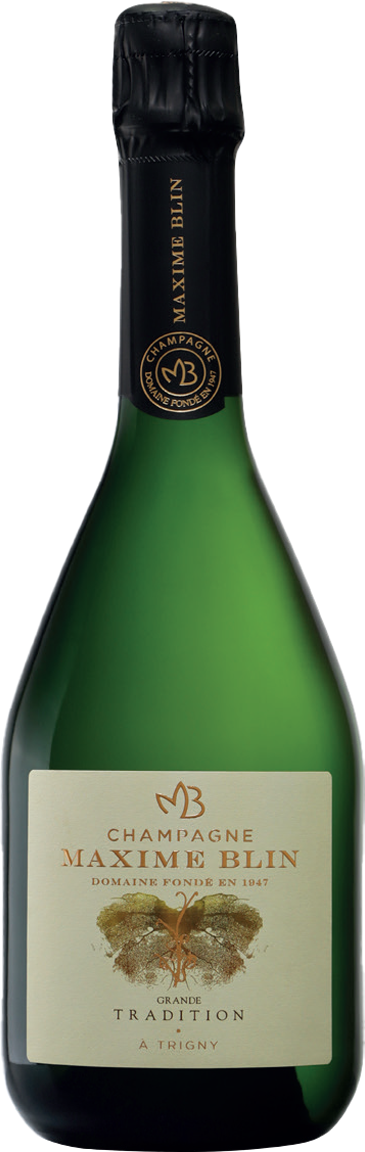
Champagne Brut 'Grande Tradition' Maxime BlinThe 'Grande Tradition' Brut Champagne from the French company Maxime Blin is a Champagne with a classic and refined style, reflecting the identity of the winery. This label is part of the 'Les Fondamentales' collection, a selection that brings together historical cuvées that fully embody the style of the Blin family, each focusing on a specific grape variety. In this particular case, the 'Grande Tradition' highlights the qualities of the Chardonnay cultivated in the Trigny area.The 'Grande Tradition' Maxime Blin Champagne comes from a blend of Chardonnay (90%) and Pinot Noir (10%) grapes grown under certified organic cultivation in the village of Trigny, within the Montagne de Reims area. Here, the vines enjoy excellent southern and south-eastern exposure and the sandy, clay-limestone soil matrix. Following the harvest, the grapes are subjected to a gentle pressing using a Coquard press, with the must thus obtained being transferred to stainless steel tanks for temperature-controlled alcoholic fermentation and subsequent complete malolactic fermentation. The vintage wine is then combined with 30% vins de réserve before bottle fermentation according to the Champenoise Method, combined with 36 months of maturation sur lattes. This is followed by dégorgement and final dosage as Extra Brut, with 4 g/l residual sugar.The 'Grande Tradition' Champagne Maxime Blin has a luminous straw yellow colour with a fine and persistent perlage. The aromatic bouquet expresses fragrant scents of citrus fruits and white flowers, surrounded by memories of bakery and mineral nuances. The taste is fresh, elegant and balanced, with a pleasant savoury trail that rests on a long citrus and mineral finish.57,00 £*Shipping: 48,00 £Secure redirect to the provider
-
Champagne Brut Grand Cru 'Tradition' GatinoisChampagne Gatinois Brut Grand Cru 'Tradition' reflects the structure and expressive depth of Champagne from Aÿ, a Grand Cru village located in the Vallée de la Marne, a few kilometres from Epernay. The village, where Pinot Noir reigns supreme with almost 90% of the entire vineyard area, is the largest of the Champagne villages with more than 4,000 inhabitants. Already famous in ancient times for the quality of its still wines, Aÿ is today established among the largest territories in all of Champagne for the cultivation of Pinot Noir.The Brut Grand Cru Champagne Gatinois 'Tradition' consists of a blend of Pinot Noir (80%) and Chardonnay (20%) grapes, varieties cultivated within the Grand Cru village of Aÿ on soils with a strong chalk component. In the cellar, the grapes undergo a soft pressing, followed by the alcoholic fermentation of the must and then the maturation of the vintage wine for a few months, which is then blended with 30% vin de reserve in the preparation of the sparkling wine base. This is followed by bottle fermentation according to the Champenoise Method, combined with at least 24-30 months of maturation on the lees in glass. This is followed by degorgement and final dosage as Brut, at 7 g/l residual sugar.The Champagne 'Tradition' Brut Grand Cru from the Gatinois sparkling wine company has a light, brilliant straw yellow colour with a refined perlage. Fresh aromas of pear, lime and white flowers emerge from the glass, supported by anelegant mineral timbre and deep hints of brioche and toasted hints. All complemented by the vinous note typical of Pinot Noir. Taste development endowed with excellent freshness and sapidity, with a good persistence in which the sensations previously perceived on the nose reappear.42,00 £*Shipping: 48,00 £Secure redirect to the provider
-
Daniel Coyle Collection 3 Books Set Talent Code, Culture Code, Culture PlaybookDescription:. Condition: BRAND NEW. Format: Paperback. The Talent Code: Greatness isn't born. It's grown. In The Talent Code, award-winning journalist Daniel Coyle draws on cutting-edge research to reveal that, far from being some abstract mystical power fixed at birth, ability really can be created and nurtured.In the process, he considers talent at work in venues as diverse as a music school in Dallas and a tennis academy near Moscow to demonstrate how the wiring of our brains can be transformed by the way we approach particular tasks. He explains what is really going on when apparently unremarkable people suddenly make a major leap forward. He reveals why some teaching methods are so much more effective than others. Above all, he shows how all of us can achieve our full potential if we set about training our brains in the right way..... The Culture Code: The Secrets of Highly Successful Groups. The Culture Code reveals the secrets of some of the best teams in the world - from Pixar to Google to US Navy SEALs - explaining the three skills such groups have mastered in order to generate trust and a willingness to collaborate. Combining cutting-edge science, on-the-ground insight and practical ideas for action, it offers a roadmap for creating an environment where innovation flourishes, problems get solved, and expectations are exceeded..... The Culture Playbook: 60 Highly Effective Actions to Help Your Group Succeed.... What is great culture made of? How do you get more of it, or turn around a group that needs improving? In The Culture Playbook, Daniel Coyle delivers a field-tested guide for building strong, cohesive, high-performing groups.Coyle, author of the New York Times bestselling The Culture Code, has spent the last six years studying and consulting with some of the most successful groups on the planet - including Pixar, Navy SEALS Team 6 and others. Here, he distils his findings into 60 concise, actionable, scientifically proven tips for building safety, generating trust, and establishing purpose - plus a set of conversation-igniting exercises to help you assess and improve your current culture.The result is a book that will sharpen the skills of any leader and strengthen the cohesion of any team - because it demonstrates that great culture is not controlled by fate or luck; it's controlled by you..... Title. Daniel Coyle Collection 3 Books Set Talent Code, Culture Code,Culture Playbook. Delivery. Content. Reviews30,99 £*Shipping: 2,99 £Secure redirect to the provider
-
Excession (Culture) - A Culture Series Novel by Iain M. Banks - Fiction - PaperbackProduct Details. Title: Excession (Culture) by Iain M. Banks. Condition: BRAND NEW. Format: Paperback. ISBN: 9780356521671 Overview:. Excession is a landmark entry in Iain M. Banks’s expansive Culture saga, celebrated for turning a sweeping space opera into a sharp meditation on power, trust, and the limits of utopia. In this standalone-feeling epic within the Culture universe, a mysterious black-sphere object—an Excession—appears on the frontier of a post-scarcity civilization, triggering an extraordinary contest of wits among diplomats, star-faring minds, and wily human operatives. Banks threads together high-stakes diplomacy, dazzling space battles, and intimate character moments with an almost cinematic tempo. Genar-Hofoen, a capable diplomat from Special Circumstances, navigates fragile alliances while an old flame and the enigmatic Ulver Seich complicate every move. The Excession challenges not only the Culture’s external enemies but the ideology that underpins a society where needs are met and choices are abundant. Fans of cerebral SF and dynamic ensemble storytelling will relish Banks’s wit, moral complexity, and audacious imagination in this quintessential Culture novel. This paperback edition makes a cornerstone of modern science fiction accessible to newcomers and satisfying to long-time readers alike, inviting you to revisit a world where intelligence—human or artificial—outthinks the impossible. What Makes This Novel Special:. Excession stands out even within the Culture canon for its deft balancing of large-scale, panoramic storytelling with deeply personal stakes. The titular artifact acts as a narrative catalyst that accelerates debates about intervention, autonomy, and collective responsibility. Banks deliberately foregrounds the Minds—the sentient starships and habitats that underpin Culture life—exploring how vast intellects negotiate restraint, risk, and moral responsibility when faced with a seemingly insolvable puzzle. The result is a novel that rewards patient readers with layered political maneuvering, witty courtroom-style exchanges, and heart-pounding action that never loses sight of character arcs. It’s a portrait of a society so advanced that questions of power become philosophical puzzles as much as geopolitical maneuvers. For readers who crave intelligent speculative fiction with thematic depth, Excession delivers both the thought-provoking ideas and the gripping, page-turning propulsion that redefine what a space opera can be. About the Author:. Iain M. Banks (1954–2013) is widely regarded as one of the most influential figures in contemporary science fiction. Writing under the name Iain M. Banks for his SF novels, he created the Culture series—vast, humanistic adventures set in a post-scarcity future where AI Minds govern starships and human passion meets galactic scale. Banks’s career began with The Wasp Factory (1984) and gained international acclaim with Consider Phlebas (1987), the first Culture novel. His work...99,99 £*Shipping: 0,00 £Secure redirect to the provider


-
What antibodies are there and which antibodies are present in which blood groups?
There are several types of antibodies, but the most commonly known are IgG, IgA, IgM, IgD, and IgE. In the context of blood groups, the most relevant antibodies are the ABO antibodies and the Rh antibodies. ABO antibodies are present in individuals who do not have the A or B antigens on their red blood cells, and they can have anti-A or anti-B antibodies depending on their blood type. Rh antibodies are present in individuals who are Rh-negative and can develop anti-Rh antibodies if exposed to Rh-positive blood. **
-
What does IgM antibodies mean?
IgM antibodies are a type of antibody produced by the immune system in response to an initial infection. They are the first antibodies to be produced in response to a new infection and are typically short-lived. IgM antibodies are important for the body's initial defense against pathogens, but they are eventually replaced by IgG antibodies, which provide long-term immunity. **
-
How are humanized antibodies produced?
Humanized antibodies are produced by taking the variable region genes from a mouse antibody and combining them with the constant region genes from a human antibody. This process creates a chimeric antibody that retains the antigen-binding specificity of the mouse antibody while minimizing the potential for an immune response in humans. The resulting humanized antibody can then be produced using recombinant DNA technology in mammalian cell culture systems. This allows for the large-scale production of humanized antibodies for therapeutic use in treating various diseases, including cancer and autoimmune disorders. **
-
How many antibodies do you have?
As an AI language model, I do not have a physical body, so I do not have antibodies. Antibodies are produced by the immune system of living organisms to help fight off infections and diseases. Each person's immune system produces a unique set of antibodies to target specific pathogens. The number of antibodies a person has can vary depending on their individual immune response and exposure to different pathogens. **


Are immunoglobulins and antibodies the same thing?
Yes, immunoglobulins and antibodies are essentially the same thing. Immunoglobulins are a type of protein produced by the immune system in response to the presence of a foreign substance, such as a virus or bacteria. Antibodies are a specific type of immunoglobulin that specifically recognize and bind to these foreign substances, marking them for destruction by other immune cells. Therefore, while the terms are often used interchangeably, antibodies are a specific subset of the larger category of immunoglobulins. **
What is the difference between antigens and antibodies?
Antigens are molecules that can trigger an immune response in the body, such as viruses, bacteria, and other foreign substances. They are recognized by the immune system as being foreign and can stimulate the production of antibodies. Antibodies, on the other hand, are proteins produced by the immune system in response to the presence of antigens. They specifically bind to antigens and help to neutralize or eliminate them from the body. In summary, antigens are the foreign substances that trigger the immune response, while antibodies are the proteins produced by the immune system to target and neutralize antigens. **
Top-Angebote
Products related to Antibodies:
-
Champagne Brut 'Grande Tradition' Maxime BlinThe 'Grande Tradition' Brut Champagne from the French company Maxime Blin is a Champagne with a classic and refined style, reflecting the identity of the winery. This label is part of the 'Les Fondamentales' collection, a selection that brings together historical cuvées that fully embody the style of the Blin family, each focusing on a specific grape variety. In this particular case, the 'Grande Tradition' highlights the qualities of the Chardonnay cultivated in the Trigny area.The 'Grande Tradition' Maxime Blin Champagne comes from a blend of Chardonnay (90%) and Pinot Noir (10%) grapes grown under certified organic cultivation in the village of Trigny, within the Montagne de Reims area. Here, the vines enjoy excellent southern and south-eastern exposure and the sandy, clay-limestone soil matrix. Following the harvest, the grapes are subjected to a gentle pressing using a Coquard press, with the must thus obtained being transferred to stainless steel tanks for temperature-controlled alcoholic fermentation and subsequent complete malolactic fermentation. The vintage wine is then combined with 30% vins de réserve before bottle fermentation according to the Champenoise Method, combined with 36 months of maturation sur lattes. This is followed by dégorgement and final dosage as Extra Brut, with 4 g/l residual sugar.The 'Grande Tradition' Champagne Maxime Blin has a luminous straw yellow colour with a fine and persistent perlage. The aromatic bouquet expresses fragrant scents of citrus fruits and white flowers, surrounded by memories of bakery and mineral nuances. The taste is fresh, elegant and balanced, with a pleasant savoury trail that rests on a long citrus and mineral finish.57,00 £*Shipping: 48,00 £Secure redirect to the provider
-
Champagne Brut Grand Cru 'Tradition' GatinoisChampagne Gatinois Brut Grand Cru 'Tradition' reflects the structure and expressive depth of Champagne from Aÿ, a Grand Cru village located in the Vallée de la Marne, a few kilometres from Epernay. The village, where Pinot Noir reigns supreme with almost 90% of the entire vineyard area, is the largest of the Champagne villages with more than 4,000 inhabitants. Already famous in ancient times for the quality of its still wines, Aÿ is today established among the largest territories in all of Champagne for the cultivation of Pinot Noir.The Brut Grand Cru Champagne Gatinois 'Tradition' consists of a blend of Pinot Noir (80%) and Chardonnay (20%) grapes, varieties cultivated within the Grand Cru village of Aÿ on soils with a strong chalk component. In the cellar, the grapes undergo a soft pressing, followed by the alcoholic fermentation of the must and then the maturation of the vintage wine for a few months, which is then blended with 30% vin de reserve in the preparation of the sparkling wine base. This is followed by bottle fermentation according to the Champenoise Method, combined with at least 24-30 months of maturation on the lees in glass. This is followed by degorgement and final dosage as Brut, at 7 g/l residual sugar.The Champagne 'Tradition' Brut Grand Cru from the Gatinois sparkling wine company has a light, brilliant straw yellow colour with a refined perlage. Fresh aromas of pear, lime and white flowers emerge from the glass, supported by anelegant mineral timbre and deep hints of brioche and toasted hints. All complemented by the vinous note typical of Pinot Noir. Taste development endowed with excellent freshness and sapidity, with a good persistence in which the sensations previously perceived on the nose reappear.42,00 £*Shipping: 48,00 £Secure redirect to the provider
-
Why are Rhesus antibodies (D-antibodies) injected after birth?
Rhesus antibodies, also known as D-antibodies, are injected after birth to prevent a condition known as hemolytic disease of the newborn (HDN). This condition occurs when a mother with Rh-negative blood type is exposed to Rh-positive blood from her baby during pregnancy or childbirth, leading to the mother's immune system producing antibodies against the baby's red blood cells. By injecting Rhesus antibodies after birth, any Rh-positive red blood cells from the baby that may have entered the mother's bloodstream are destroyed before her immune system can mount a significant response, preventing HDN from occurring in subsequent pregnancies. **
-
Why are Rhesus antibodies (D antibodies) injected after birth?
Rhesus antibodies, also known as D antibodies, are injected after birth to prevent a condition called hemolytic disease of the newborn (HDN). This condition occurs when a mother with Rh-negative blood type is exposed to Rh-positive blood from her baby during pregnancy or childbirth. The mother's immune system can develop antibodies against the Rh-positive blood, which can then attack the baby's red blood cells in future pregnancies. By injecting Rhesus antibodies after birth, any Rh-positive blood from the baby that may have entered the mother's bloodstream is targeted and destroyed before her immune system can develop its own antibodies, thus preventing HDN in future pregnancies. **
-
What antibodies are there and which antibodies are present in which blood groups?
There are several types of antibodies, but the most commonly known are IgG, IgA, IgM, IgD, and IgE. In the context of blood groups, the most relevant antibodies are the ABO antibodies and the Rh antibodies. ABO antibodies are present in individuals who do not have the A or B antigens on their red blood cells, and they can have anti-A or anti-B antibodies depending on their blood type. Rh antibodies are present in individuals who are Rh-negative and can develop anti-Rh antibodies if exposed to Rh-positive blood. **
-
What does IgM antibodies mean?
IgM antibodies are a type of antibody produced by the immune system in response to an initial infection. They are the first antibodies to be produced in response to a new infection and are typically short-lived. IgM antibodies are important for the body's initial defense against pathogens, but they are eventually replaced by IgG antibodies, which provide long-term immunity. **
Similar search terms for Antibodies
-
Daniel Coyle Collection 3 Books Set Talent Code, Culture Code, Culture PlaybookDescription:. Condition: BRAND NEW. Format: Paperback. The Talent Code: Greatness isn't born. It's grown. In The Talent Code, award-winning journalist Daniel Coyle draws on cutting-edge research to reveal that, far from being some abstract mystical power fixed at birth, ability really can be created and nurtured.In the process, he considers talent at work in venues as diverse as a music school in Dallas and a tennis academy near Moscow to demonstrate how the wiring of our brains can be transformed by the way we approach particular tasks. He explains what is really going on when apparently unremarkable people suddenly make a major leap forward. He reveals why some teaching methods are so much more effective than others. Above all, he shows how all of us can achieve our full potential if we set about training our brains in the right way..... The Culture Code: The Secrets of Highly Successful Groups. The Culture Code reveals the secrets of some of the best teams in the world - from Pixar to Google to US Navy SEALs - explaining the three skills such groups have mastered in order to generate trust and a willingness to collaborate. Combining cutting-edge science, on-the-ground insight and practical ideas for action, it offers a roadmap for creating an environment where innovation flourishes, problems get solved, and expectations are exceeded..... The Culture Playbook: 60 Highly Effective Actions to Help Your Group Succeed.... What is great culture made of? How do you get more of it, or turn around a group that needs improving? In The Culture Playbook, Daniel Coyle delivers a field-tested guide for building strong, cohesive, high-performing groups.Coyle, author of the New York Times bestselling The Culture Code, has spent the last six years studying and consulting with some of the most successful groups on the planet - including Pixar, Navy SEALS Team 6 and others. Here, he distils his findings into 60 concise, actionable, scientifically proven tips for building safety, generating trust, and establishing purpose - plus a set of conversation-igniting exercises to help you assess and improve your current culture.The result is a book that will sharpen the skills of any leader and strengthen the cohesion of any team - because it demonstrates that great culture is not controlled by fate or luck; it's controlled by you..... Title. Daniel Coyle Collection 3 Books Set Talent Code, Culture Code,Culture Playbook. Delivery. Content. Reviews30,99 £*Shipping: 2,99 £Secure redirect to the provider
-
Excession (Culture) - A Culture Series Novel by Iain M. Banks - Fiction - PaperbackProduct Details. Title: Excession (Culture) by Iain M. Banks. Condition: BRAND NEW. Format: Paperback. ISBN: 9780356521671 Overview:. Excession is a landmark entry in Iain M. Banks’s expansive Culture saga, celebrated for turning a sweeping space opera into a sharp meditation on power, trust, and the limits of utopia. In this standalone-feeling epic within the Culture universe, a mysterious black-sphere object—an Excession—appears on the frontier of a post-scarcity civilization, triggering an extraordinary contest of wits among diplomats, star-faring minds, and wily human operatives. Banks threads together high-stakes diplomacy, dazzling space battles, and intimate character moments with an almost cinematic tempo. Genar-Hofoen, a capable diplomat from Special Circumstances, navigates fragile alliances while an old flame and the enigmatic Ulver Seich complicate every move. The Excession challenges not only the Culture’s external enemies but the ideology that underpins a society where needs are met and choices are abundant. Fans of cerebral SF and dynamic ensemble storytelling will relish Banks’s wit, moral complexity, and audacious imagination in this quintessential Culture novel. This paperback edition makes a cornerstone of modern science fiction accessible to newcomers and satisfying to long-time readers alike, inviting you to revisit a world where intelligence—human or artificial—outthinks the impossible. What Makes This Novel Special:. Excession stands out even within the Culture canon for its deft balancing of large-scale, panoramic storytelling with deeply personal stakes. The titular artifact acts as a narrative catalyst that accelerates debates about intervention, autonomy, and collective responsibility. Banks deliberately foregrounds the Minds—the sentient starships and habitats that underpin Culture life—exploring how vast intellects negotiate restraint, risk, and moral responsibility when faced with a seemingly insolvable puzzle. The result is a novel that rewards patient readers with layered political maneuvering, witty courtroom-style exchanges, and heart-pounding action that never loses sight of character arcs. It’s a portrait of a society so advanced that questions of power become philosophical puzzles as much as geopolitical maneuvers. For readers who crave intelligent speculative fiction with thematic depth, Excession delivers both the thought-provoking ideas and the gripping, page-turning propulsion that redefine what a space opera can be. About the Author:. Iain M. Banks (1954–2013) is widely regarded as one of the most influential figures in contemporary science fiction. Writing under the name Iain M. Banks for his SF novels, he created the Culture series—vast, humanistic adventures set in a post-scarcity future where AI Minds govern starships and human passion meets galactic scale. Banks’s career began with The Wasp Factory (1984) and gained international acclaim with Consider Phlebas (1987), the first Culture novel. His work...99,99 £*Shipping: 0,00 £Secure redirect to the provider
-
Dream Decor Rugs Steppe Rauma Gray-Cream Area RugFusing the relaxed and casual look of traditional cowhide area rugs, the Steppe Collection takes the hide trend to another level. These digitally printed area rugs were designed to emulate cowhides in various geometric patterns.47,39 $*Shipping: 0,00 $Secure redirect to the provider
-
How are humanized antibodies produced?
Humanized antibodies are produced by taking the variable region genes from a mouse antibody and combining them with the constant region genes from a human antibody. This process creates a chimeric antibody that retains the antigen-binding specificity of the mouse antibody while minimizing the potential for an immune response in humans. The resulting humanized antibody can then be produced using recombinant DNA technology in mammalian cell culture systems. This allows for the large-scale production of humanized antibodies for therapeutic use in treating various diseases, including cancer and autoimmune disorders. **
-
How many antibodies do you have?
As an AI language model, I do not have a physical body, so I do not have antibodies. Antibodies are produced by the immune system of living organisms to help fight off infections and diseases. Each person's immune system produces a unique set of antibodies to target specific pathogens. The number of antibodies a person has can vary depending on their individual immune response and exposure to different pathogens. **
-
Are immunoglobulins and antibodies the same thing?
Yes, immunoglobulins and antibodies are essentially the same thing. Immunoglobulins are a type of protein produced by the immune system in response to the presence of a foreign substance, such as a virus or bacteria. Antibodies are a specific type of immunoglobulin that specifically recognize and bind to these foreign substances, marking them for destruction by other immune cells. Therefore, while the terms are often used interchangeably, antibodies are a specific subset of the larger category of immunoglobulins. **
-
What is the difference between antigens and antibodies?
Antigens are molecules that can trigger an immune response in the body, such as viruses, bacteria, and other foreign substances. They are recognized by the immune system as being foreign and can stimulate the production of antibodies. Antibodies, on the other hand, are proteins produced by the immune system in response to the presence of antigens. They specifically bind to antigens and help to neutralize or eliminate them from the body. In summary, antigens are the foreign substances that trigger the immune response, while antibodies are the proteins produced by the immune system to target and neutralize antigens. **
* All prices are inclusive of VAT and, if applicable, plus shipping costs. The offer information is based on the details provided by the respective shop and is updated through automated processes. Real-time updates do not occur, so deviations can occur in individual cases. ** Note: Parts of this content were created by AI.