Buy kalmykia.eu ?
We are moving the project
kalmykia.eu .
Are you interested in purchasing the domain
kalmykia.eu ?
domain@kv-gmbh.de · 0541-91531010
Buy kalmykia.eu ?
What is the etymology of Turkish Pepper?
The term "Turkish Pepper" is believed to have originated from the use of a specific type of pepper called "Urfa biber" in Turkish cuisine. Urfa biber is a dried red pepper that is grown in the Urfa region of Turkey and is known for its smoky, earthy flavor with a mild heat. The name "Turkish Pepper" likely refers to the origin of this specific type of pepper and its association with Turkish cuisine. **
What is the etymology of the word Funk?
The word "funk" originated in the late 17th century, derived from the French word "fumet," meaning "smell" or "vapor." It was initially used to describe a strong, musty smell. Over time, the term evolved to describe a style of music characterized by a strong rhythmic groove and soulful vocals, popularized in the 1960s and 1970s. Today, "funk" is associated with a genre of music that blends elements of soul, jazz, and rhythm and blues. **


Similar search terms for Etymology
Top-Angebote
Products related to Etymology:
-
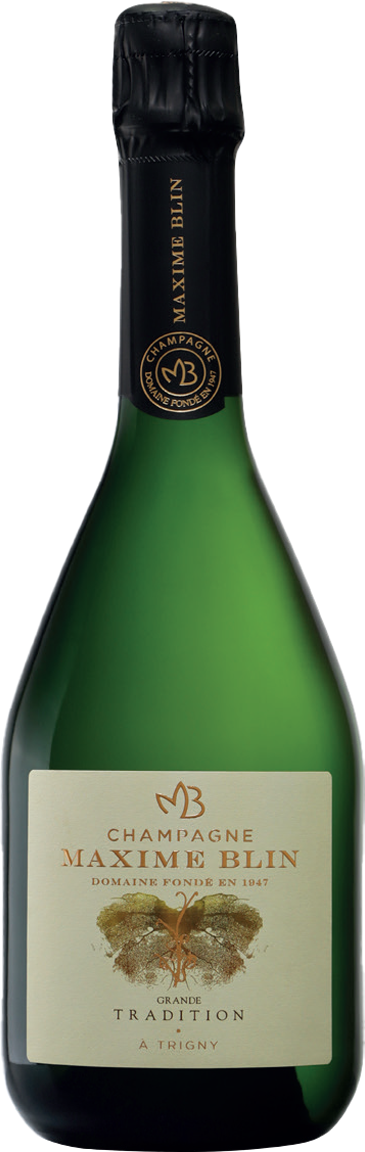
Champagne Brut 'Grande Tradition' Maxime BlinThe 'Grande Tradition' Brut Champagne from the French company Maxime Blin is a Champagne with a classic and refined style, reflecting the identity of the winery. This label is part of the 'Les Fondamentales' collection, a selection that brings together historical cuvées that fully embody the style of the Blin family, each focusing on a specific grape variety. In this particular case, the 'Grande Tradition' highlights the qualities of the Chardonnay cultivated in the Trigny area.The 'Grande Tradition' Maxime Blin Champagne comes from a blend of Chardonnay (90%) and Pinot Noir (10%) grapes grown under certified organic cultivation in the village of Trigny, within the Montagne de Reims area. Here, the vines enjoy excellent southern and south-eastern exposure and the sandy, clay-limestone soil matrix. Following the harvest, the grapes are subjected to a gentle pressing using a Coquard press, with the must thus obtained being transferred to stainless steel tanks for temperature-controlled alcoholic fermentation and subsequent complete malolactic fermentation. The vintage wine is then combined with 30% vins de réserve before bottle fermentation according to the Champenoise Method, combined with 36 months of maturation sur lattes. This is followed by dégorgement and final dosage as Extra Brut, with 4 g/l residual sugar.The 'Grande Tradition' Champagne Maxime Blin has a luminous straw yellow colour with a fine and persistent perlage. The aromatic bouquet expresses fragrant scents of citrus fruits and white flowers, surrounded by memories of bakery and mineral nuances. The taste is fresh, elegant and balanced, with a pleasant savoury trail that rests on a long citrus and mineral finish.57,00 £*Shipping: 48,00 £Secure redirect to the provider
-
Champagne Brut Grand Cru 'Tradition' GatinoisChampagne Gatinois Brut Grand Cru 'Tradition' reflects the structure and expressive depth of Champagne from Aÿ, a Grand Cru village located in the Vallée de la Marne, a few kilometres from Epernay. The village, where Pinot Noir reigns supreme with almost 90% of the entire vineyard area, is the largest of the Champagne villages with more than 4,000 inhabitants. Already famous in ancient times for the quality of its still wines, Aÿ is today established among the largest territories in all of Champagne for the cultivation of Pinot Noir.The Brut Grand Cru Champagne Gatinois 'Tradition' consists of a blend of Pinot Noir (80%) and Chardonnay (20%) grapes, varieties cultivated within the Grand Cru village of Aÿ on soils with a strong chalk component. In the cellar, the grapes undergo a soft pressing, followed by the alcoholic fermentation of the must and then the maturation of the vintage wine for a few months, which is then blended with 30% vin de reserve in the preparation of the sparkling wine base. This is followed by bottle fermentation according to the Champenoise Method, combined with at least 24-30 months of maturation on the lees in glass. This is followed by degorgement and final dosage as Brut, at 7 g/l residual sugar.The Champagne 'Tradition' Brut Grand Cru from the Gatinois sparkling wine company has a light, brilliant straw yellow colour with a refined perlage. Fresh aromas of pear, lime and white flowers emerge from the glass, supported by anelegant mineral timbre and deep hints of brioche and toasted hints. All complemented by the vinous note typical of Pinot Noir. Taste development endowed with excellent freshness and sapidity, with a good persistence in which the sensations previously perceived on the nose reappear.42,00 £*Shipping: 48,00 £Secure redirect to the provider
-
Les Jardins LED path light Tradition Sensor Corten 90cm Tradition, dimmable, Brown / rust, Aluminium, Modern, outdoor solar lightsThe LED path light Tradition made of aluminum shows a modern cuboid shape and rust-brown corten steel finish. It can be operated autonomously thanks to equipment with solar module, rechargeable battery and motion sensor.- equipped with dimming function- operating time when fully charged: 5 h to 200 h (depending on light output)- protection class: IP66- alternatively rechargeable via USB connection- via ground spike (included) or permanently installable398,43 £*Shipping: 4,99 £Secure redirect to the provider



-
What is the etymology of the word Hexe?
The word "Hexe" comes from the Old High German word "hagazussa," which means "witch." This word is derived from the Middle High German "hag," meaning "hedge," and "zussa," meaning "sitting." The term "hagazussa" originally referred to a female magician or sorceress who was believed to have the ability to ride on the backs of animals and perform magical spells. Over time, the word evolved into "Hexe" in modern German. **
-
What is the etymology of the term "Blutblüte"?
The term "Blutblüte" is of German origin. It is a compound word made up of "Blut" meaning blood and "Blüte" meaning bloom or blossom. When combined, "Blutblüte" refers to the blooming or flourishing of blood, often used metaphorically to describe a period of violence or bloodshed. **
-
What is the connection between personal development, etymology, and philosophy?
Personal development, etymology, and philosophy are interconnected in the sense that they all involve the exploration and understanding of oneself and the world. Personal development focuses on self-improvement and growth, while etymology delves into the origins and meanings of words, and philosophy seeks to understand the fundamental nature of existence and knowledge. By studying etymology, one can gain insight into the historical and cultural context of words, which can in turn inform one's personal development and philosophical understanding. Philosophy, on the other hand, can provide a framework for understanding the deeper meaning and purpose of personal development, while also influencing the way we interpret and use language. Overall, these three areas of study are interconnected in their pursuit of self-awareness, understanding, and growth. **
-
What is the etymology of the term "Komplekte" in the DDRNVA?
The term "Komplekte" in the DDRNVA is derived from the German word "komplett," which means complete or entire. In the context of the DDRNVA, "Komplekte" refers to a set or collection of items that are necessary for a specific task or purpose. This term reflects the emphasis on organization and efficiency within the DDRNVA, as having all the necessary components in a "Komplekte" ensures readiness and effectiveness in carrying out military operations. **


What is the origin or etymology of the puzzled expression Nani Nanu?
The expression "Nani Nanu" originates from the Japanese language. "Nani" means "what" in Japanese, while "Nanu" is a playful and informal way of saying "what" in some Japanese dialects. When used together, "Nani Nanu" is a whimsical and light-hearted way of expressing confusion or puzzlement. It has gained popularity in internet culture and among fans of Japanese media. **
What is the origin or etymology of the surprised expression "Nani Nanu"?
The expression "Nani Nanu" originates from Japanese and is commonly used to express surprise or disbelief. In Japanese, "nani" means "what," and "nanu" is a colloquial variation of "nanda," which means "is" or "what is." When combined, "Nani Nanu" essentially translates to "What is it?" or "What's going on?" and is often used in anime, manga, and Japanese pop culture to convey shock or astonishment. **
Top-Angebote
Products related to Etymology:
-
words and pictures Wonderful Words That Tell A Tale: Etymology Of Everyday Words - Non Fiction - PaperbackTitle:. Wonderful Words That Tell A Tale Format: Paperback Overview:. Language surrounds us, yet most people rarely pause to examine where everyday terms actually come from. This paperback unlocks that hidden history through a friendly investigation of more than one hundred familiar words. You will trace how simple vocabulary traveled centuries ago before settling into modern usage. The author breaks down complicated linguistic shifts into clear, digestible entries. You do not need a university degree to follow the journey. Each chapter reveals how trade, migration, and technology quietly reshape the way you speak. The pacing stays relaxed throughout, allowing you to read at whichever speed feels natural. You pick up the book during a quiet afternoon and discover exactly why certain phrases endure. References blend seamlessly with historical context to form a cohesive narrative arc. You finish each section feeling genuinely informed rather than exhausted. The format invites repeated browsing whenever a new curiosity strikes. Knowledge accumulates steadily as you flip from page to page. It transforms routine conversation into a shared intellectual adventure. Whether you browse chapter by chapter or dip in during spare moments, the material never feels rushed. You walk away with a richer appreciation for the tools you use to connect with others. What Makes This Book Stand Out:. Many reference guides drown readers in dense academic jargon. This volume actively avoids that trap. You receive straightforward explanations backed by playful anecdotes. The selection criteria focus strictly on living vocabulary rather than extinct dialects. You skip obscure terms in favour of words you actually encounter daily. Each entry maps a specific path backward through historical records. You witness how commerce, conflict, and invention permanently alter grammar structures. The layout prioritises clarity over exhaustive dictionary listings. Generous margins leave plenty of visual breathing space. You experience active learning rather than passive memorisation. The tone remains consistently conversational across every single page. You never feel pressured to absorb everything in one sitting. Practical curation bridges professional curiosity and casual hobbyist interests effortlessly. Fresh connections emerge naturally upon rereading. You keep returning to the covers because the insights stay relevant years later. Who This Book Is Perfect For:. Writers, editors, and journalism students will treasure this compact reference. Classroom tutors appreciate its accessible structure for inspiring younger learners. Educators can easily pull targeted excerpts to spark lively classroom debates. History enthusiasts delight in watching linguistic shifts mirror major societal events. Parents enjoy sharing surprising trivia during family drives or weekend trips. Collectors seeking tidy shelf-friendly volumes will welcome the manageable dimensions. Communication professionals...14,99 £*Shipping: 2,99 £Secure redirect to the provider
-
Champagne Brut 'Grande Tradition' Maxime BlinThe 'Grande Tradition' Brut Champagne from the French company Maxime Blin is a Champagne with a classic and refined style, reflecting the identity of the winery. This label is part of the 'Les Fondamentales' collection, a selection that brings together historical cuvées that fully embody the style of the Blin family, each focusing on a specific grape variety. In this particular case, the 'Grande Tradition' highlights the qualities of the Chardonnay cultivated in the Trigny area.The 'Grande Tradition' Maxime Blin Champagne comes from a blend of Chardonnay (90%) and Pinot Noir (10%) grapes grown under certified organic cultivation in the village of Trigny, within the Montagne de Reims area. Here, the vines enjoy excellent southern and south-eastern exposure and the sandy, clay-limestone soil matrix. Following the harvest, the grapes are subjected to a gentle pressing using a Coquard press, with the must thus obtained being transferred to stainless steel tanks for temperature-controlled alcoholic fermentation and subsequent complete malolactic fermentation. The vintage wine is then combined with 30% vins de réserve before bottle fermentation according to the Champenoise Method, combined with 36 months of maturation sur lattes. This is followed by dégorgement and final dosage as Extra Brut, with 4 g/l residual sugar.The 'Grande Tradition' Champagne Maxime Blin has a luminous straw yellow colour with a fine and persistent perlage. The aromatic bouquet expresses fragrant scents of citrus fruits and white flowers, surrounded by memories of bakery and mineral nuances. The taste is fresh, elegant and balanced, with a pleasant savoury trail that rests on a long citrus and mineral finish.57,00 £*Shipping: 48,00 £Secure redirect to the provider
-
What is the etymology of Turkish Pepper?
The term "Turkish Pepper" is believed to have originated from the use of a specific type of pepper called "Urfa biber" in Turkish cuisine. Urfa biber is a dried red pepper that is grown in the Urfa region of Turkey and is known for its smoky, earthy flavor with a mild heat. The name "Turkish Pepper" likely refers to the origin of this specific type of pepper and its association with Turkish cuisine. **
-
What is the etymology of the word Funk?
The word "funk" originated in the late 17th century, derived from the French word "fumet," meaning "smell" or "vapor." It was initially used to describe a strong, musty smell. Over time, the term evolved to describe a style of music characterized by a strong rhythmic groove and soulful vocals, popularized in the 1960s and 1970s. Today, "funk" is associated with a genre of music that blends elements of soul, jazz, and rhythm and blues. **
-
What is the etymology of the word Hexe?
The word "Hexe" comes from the Old High German word "hagazussa," which means "witch." This word is derived from the Middle High German "hag," meaning "hedge," and "zussa," meaning "sitting." The term "hagazussa" originally referred to a female magician or sorceress who was believed to have the ability to ride on the backs of animals and perform magical spells. Over time, the word evolved into "Hexe" in modern German. **
-
What is the etymology of the term "Blutblüte"?
The term "Blutblüte" is of German origin. It is a compound word made up of "Blut" meaning blood and "Blüte" meaning bloom or blossom. When combined, "Blutblüte" refers to the blooming or flourishing of blood, often used metaphorically to describe a period of violence or bloodshed. **
Similar search terms for Etymology
-
Champagne Brut Grand Cru 'Tradition' GatinoisChampagne Gatinois Brut Grand Cru 'Tradition' reflects the structure and expressive depth of Champagne from Aÿ, a Grand Cru village located in the Vallée de la Marne, a few kilometres from Epernay. The village, where Pinot Noir reigns supreme with almost 90% of the entire vineyard area, is the largest of the Champagne villages with more than 4,000 inhabitants. Already famous in ancient times for the quality of its still wines, Aÿ is today established among the largest territories in all of Champagne for the cultivation of Pinot Noir.The Brut Grand Cru Champagne Gatinois 'Tradition' consists of a blend of Pinot Noir (80%) and Chardonnay (20%) grapes, varieties cultivated within the Grand Cru village of Aÿ on soils with a strong chalk component. In the cellar, the grapes undergo a soft pressing, followed by the alcoholic fermentation of the must and then the maturation of the vintage wine for a few months, which is then blended with 30% vin de reserve in the preparation of the sparkling wine base. This is followed by bottle fermentation according to the Champenoise Method, combined with at least 24-30 months of maturation on the lees in glass. This is followed by degorgement and final dosage as Brut, at 7 g/l residual sugar.The Champagne 'Tradition' Brut Grand Cru from the Gatinois sparkling wine company has a light, brilliant straw yellow colour with a refined perlage. Fresh aromas of pear, lime and white flowers emerge from the glass, supported by anelegant mineral timbre and deep hints of brioche and toasted hints. All complemented by the vinous note typical of Pinot Noir. Taste development endowed with excellent freshness and sapidity, with a good persistence in which the sensations previously perceived on the nose reappear.42,00 £*Shipping: 48,00 £Secure redirect to the provider
-
Les Jardins LED path light Tradition Sensor Corten 90cm Tradition, dimmable, Brown / rust, Aluminium, Modern, outdoor solar lightsThe LED path light Tradition made of aluminum shows a modern cuboid shape and rust-brown corten steel finish. It can be operated autonomously thanks to equipment with solar module, rechargeable battery and motion sensor.- equipped with dimming function- operating time when fully charged: 5 h to 200 h (depending on light output)- protection class: IP66- alternatively rechargeable via USB connection- via ground spike (included) or permanently installable398,43 £*Shipping: 4,99 £Secure redirect to the provider
-
Daniel Coyle Collection 3 Books Set Talent Code, Culture Code, Culture PlaybookDescription:. Condition: BRAND NEW. Format: Paperback. The Talent Code: Greatness isn't born. It's grown. In The Talent Code, award-winning journalist Daniel Coyle draws on cutting-edge research to reveal that, far from being some abstract mystical power fixed at birth, ability really can be created and nurtured.In the process, he considers talent at work in venues as diverse as a music school in Dallas and a tennis academy near Moscow to demonstrate how the wiring of our brains can be transformed by the way we approach particular tasks. He explains what is really going on when apparently unremarkable people suddenly make a major leap forward. He reveals why some teaching methods are so much more effective than others. Above all, he shows how all of us can achieve our full potential if we set about training our brains in the right way..... The Culture Code: The Secrets of Highly Successful Groups. The Culture Code reveals the secrets of some of the best teams in the world - from Pixar to Google to US Navy SEALs - explaining the three skills such groups have mastered in order to generate trust and a willingness to collaborate. Combining cutting-edge science, on-the-ground insight and practical ideas for action, it offers a roadmap for creating an environment where innovation flourishes, problems get solved, and expectations are exceeded..... The Culture Playbook: 60 Highly Effective Actions to Help Your Group Succeed.... What is great culture made of? How do you get more of it, or turn around a group that needs improving? In The Culture Playbook, Daniel Coyle delivers a field-tested guide for building strong, cohesive, high-performing groups.Coyle, author of the New York Times bestselling The Culture Code, has spent the last six years studying and consulting with some of the most successful groups on the planet - including Pixar, Navy SEALS Team 6 and others. Here, he distils his findings into 60 concise, actionable, scientifically proven tips for building safety, generating trust, and establishing purpose - plus a set of conversation-igniting exercises to help you assess and improve your current culture.The result is a book that will sharpen the skills of any leader and strengthen the cohesion of any team - because it demonstrates that great culture is not controlled by fate or luck; it's controlled by you..... Title. Daniel Coyle Collection 3 Books Set Talent Code, Culture Code,Culture Playbook. Delivery. Content. Reviews30,99 £*Shipping: 2,99 £Secure redirect to the provider
-
Excession (Culture) - A Culture Series Novel by Iain M. Banks - Fiction - PaperbackProduct Details. Title: Excession (Culture) by Iain M. Banks. Condition: BRAND NEW. Format: Paperback. ISBN: 9780356521671 Overview:. Excession is a landmark entry in Iain M. Banks’s expansive Culture saga, celebrated for turning a sweeping space opera into a sharp meditation on power, trust, and the limits of utopia. In this standalone-feeling epic within the Culture universe, a mysterious black-sphere object—an Excession—appears on the frontier of a post-scarcity civilization, triggering an extraordinary contest of wits among diplomats, star-faring minds, and wily human operatives. Banks threads together high-stakes diplomacy, dazzling space battles, and intimate character moments with an almost cinematic tempo. Genar-Hofoen, a capable diplomat from Special Circumstances, navigates fragile alliances while an old flame and the enigmatic Ulver Seich complicate every move. The Excession challenges not only the Culture’s external enemies but the ideology that underpins a society where needs are met and choices are abundant. Fans of cerebral SF and dynamic ensemble storytelling will relish Banks’s wit, moral complexity, and audacious imagination in this quintessential Culture novel. This paperback edition makes a cornerstone of modern science fiction accessible to newcomers and satisfying to long-time readers alike, inviting you to revisit a world where intelligence—human or artificial—outthinks the impossible. What Makes This Novel Special:. Excession stands out even within the Culture canon for its deft balancing of large-scale, panoramic storytelling with deeply personal stakes. The titular artifact acts as a narrative catalyst that accelerates debates about intervention, autonomy, and collective responsibility. Banks deliberately foregrounds the Minds—the sentient starships and habitats that underpin Culture life—exploring how vast intellects negotiate restraint, risk, and moral responsibility when faced with a seemingly insolvable puzzle. The result is a novel that rewards patient readers with layered political maneuvering, witty courtroom-style exchanges, and heart-pounding action that never loses sight of character arcs. It’s a portrait of a society so advanced that questions of power become philosophical puzzles as much as geopolitical maneuvers. For readers who crave intelligent speculative fiction with thematic depth, Excession delivers both the thought-provoking ideas and the gripping, page-turning propulsion that redefine what a space opera can be. About the Author:. Iain M. Banks (1954–2013) is widely regarded as one of the most influential figures in contemporary science fiction. Writing under the name Iain M. Banks for his SF novels, he created the Culture series—vast, humanistic adventures set in a post-scarcity future where AI Minds govern starships and human passion meets galactic scale. Banks’s career began with The Wasp Factory (1984) and gained international acclaim with Consider Phlebas (1987), the first Culture novel. His work...99,99 £*Shipping: 0,00 £Secure redirect to the provider
-
What is the connection between personal development, etymology, and philosophy?
Personal development, etymology, and philosophy are interconnected in the sense that they all involve the exploration and understanding of oneself and the world. Personal development focuses on self-improvement and growth, while etymology delves into the origins and meanings of words, and philosophy seeks to understand the fundamental nature of existence and knowledge. By studying etymology, one can gain insight into the historical and cultural context of words, which can in turn inform one's personal development and philosophical understanding. Philosophy, on the other hand, can provide a framework for understanding the deeper meaning and purpose of personal development, while also influencing the way we interpret and use language. Overall, these three areas of study are interconnected in their pursuit of self-awareness, understanding, and growth. **
-
What is the etymology of the term "Komplekte" in the DDRNVA?
The term "Komplekte" in the DDRNVA is derived from the German word "komplett," which means complete or entire. In the context of the DDRNVA, "Komplekte" refers to a set or collection of items that are necessary for a specific task or purpose. This term reflects the emphasis on organization and efficiency within the DDRNVA, as having all the necessary components in a "Komplekte" ensures readiness and effectiveness in carrying out military operations. **
-
What is the origin or etymology of the puzzled expression Nani Nanu?
The expression "Nani Nanu" originates from the Japanese language. "Nani" means "what" in Japanese, while "Nanu" is a playful and informal way of saying "what" in some Japanese dialects. When used together, "Nani Nanu" is a whimsical and light-hearted way of expressing confusion or puzzlement. It has gained popularity in internet culture and among fans of Japanese media. **
-
What is the origin or etymology of the surprised expression "Nani Nanu"?
The expression "Nani Nanu" originates from Japanese and is commonly used to express surprise or disbelief. In Japanese, "nani" means "what," and "nanu" is a colloquial variation of "nanda," which means "is" or "what is." When combined, "Nani Nanu" essentially translates to "What is it?" or "What's going on?" and is often used in anime, manga, and Japanese pop culture to convey shock or astonishment. **
* All prices are inclusive of VAT and, if applicable, plus shipping costs. The offer information is based on the details provided by the respective shop and is updated through automated processes. Real-time updates do not occur, so deviations can occur in individual cases. ** Note: Parts of this content were created by AI.