Buy kalmykia.eu ?
We are moving the project
kalmykia.eu .
Are you interested in purchasing the domain
kalmykia.eu ?
domain@kv-gmbh.de · 0541-91531010
Buy kalmykia.eu ?
Is it a genitive object or an adverbial genitive?
The distinction between a genitive object and an adverbial genitive depends on the function of the genitive in the sentence. A genitive object typically functions as the direct object of a verb, indicating possession or association, while an adverbial genitive modifies the action of the verb, indicating manner, time, place, or other circumstances. To determine whether a genitive is a genitive object or an adverbial genitive, it is important to analyze the role it plays in the sentence and its relationship to the verb and other elements. **
'Genitive or accusative?'
The genitive case is used to show possession or relationship between nouns, while the accusative case is used to show the direct object of a verb. In general, the genitive case is used to indicate ownership or association, while the accusative case is used to indicate the direct object of a verb or the object of a preposition. The choice between genitive and accusative depends on the specific context and the grammatical rules of the language being used. **


Similar search terms for Genitive
Top-Angebote
Products related to Genitive:
-
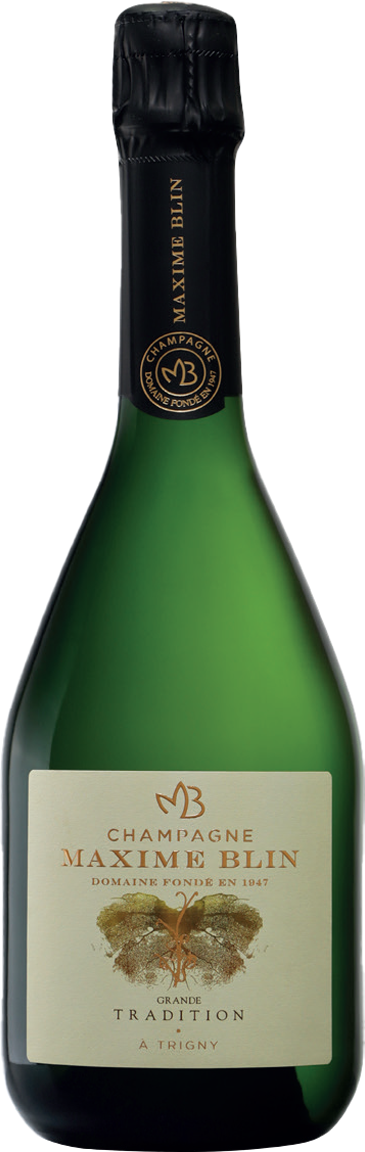
Champagne Brut 'Grande Tradition' Maxime BlinThe 'Grande Tradition' Brut Champagne from the French company Maxime Blin is a Champagne with a classic and refined style, reflecting the identity of the winery. This label is part of the 'Les Fondamentales' collection, a selection that brings together historical cuvées that fully embody the style of the Blin family, each focusing on a specific grape variety. In this particular case, the 'Grande Tradition' highlights the qualities of the Chardonnay cultivated in the Trigny area.The 'Grande Tradition' Maxime Blin Champagne comes from a blend of Chardonnay (90%) and Pinot Noir (10%) grapes grown under certified organic cultivation in the village of Trigny, within the Montagne de Reims area. Here, the vines enjoy excellent southern and south-eastern exposure and the sandy, clay-limestone soil matrix. Following the harvest, the grapes are subjected to a gentle pressing using a Coquard press, with the must thus obtained being transferred to stainless steel tanks for temperature-controlled alcoholic fermentation and subsequent complete malolactic fermentation. The vintage wine is then combined with 30% vins de réserve before bottle fermentation according to the Champenoise Method, combined with 36 months of maturation sur lattes. This is followed by dégorgement and final dosage as Extra Brut, with 4 g/l residual sugar.The 'Grande Tradition' Champagne Maxime Blin has a luminous straw yellow colour with a fine and persistent perlage. The aromatic bouquet expresses fragrant scents of citrus fruits and white flowers, surrounded by memories of bakery and mineral nuances. The taste is fresh, elegant and balanced, with a pleasant savoury trail that rests on a long citrus and mineral finish.57,00 £*Shipping: 48,00 £Secure redirect to the provider
-
Champagne Brut Grand Cru 'Tradition' GatinoisChampagne Gatinois Brut Grand Cru 'Tradition' reflects the structure and expressive depth of Champagne from Aÿ, a Grand Cru village located in the Vallée de la Marne, a few kilometres from Epernay. The village, where Pinot Noir reigns supreme with almost 90% of the entire vineyard area, is the largest of the Champagne villages with more than 4,000 inhabitants. Already famous in ancient times for the quality of its still wines, Aÿ is today established among the largest territories in all of Champagne for the cultivation of Pinot Noir.The Brut Grand Cru Champagne Gatinois 'Tradition' consists of a blend of Pinot Noir (80%) and Chardonnay (20%) grapes, varieties cultivated within the Grand Cru village of Aÿ on soils with a strong chalk component. In the cellar, the grapes undergo a soft pressing, followed by the alcoholic fermentation of the must and then the maturation of the vintage wine for a few months, which is then blended with 30% vin de reserve in the preparation of the sparkling wine base. This is followed by bottle fermentation according to the Champenoise Method, combined with at least 24-30 months of maturation on the lees in glass. This is followed by degorgement and final dosage as Brut, at 7 g/l residual sugar.The Champagne 'Tradition' Brut Grand Cru from the Gatinois sparkling wine company has a light, brilliant straw yellow colour with a refined perlage. Fresh aromas of pear, lime and white flowers emerge from the glass, supported by anelegant mineral timbre and deep hints of brioche and toasted hints. All complemented by the vinous note typical of Pinot Noir. Taste development endowed with excellent freshness and sapidity, with a good persistence in which the sensations previously perceived on the nose reappear.42,00 £*Shipping: 48,00 £Secure redirect to the provider
-
Daniel Coyle Collection 3 Books Set Talent Code, Culture Code, Culture PlaybookDescription:. Condition: BRAND NEW. Format: Paperback. The Talent Code: Greatness isn't born. It's grown. In The Talent Code, award-winning journalist Daniel Coyle draws on cutting-edge research to reveal that, far from being some abstract mystical power fixed at birth, ability really can be created and nurtured.In the process, he considers talent at work in venues as diverse as a music school in Dallas and a tennis academy near Moscow to demonstrate how the wiring of our brains can be transformed by the way we approach particular tasks. He explains what is really going on when apparently unremarkable people suddenly make a major leap forward. He reveals why some teaching methods are so much more effective than others. Above all, he shows how all of us can achieve our full potential if we set about training our brains in the right way..... The Culture Code: The Secrets of Highly Successful Groups. The Culture Code reveals the secrets of some of the best teams in the world - from Pixar to Google to US Navy SEALs - explaining the three skills such groups have mastered in order to generate trust and a willingness to collaborate. Combining cutting-edge science, on-the-ground insight and practical ideas for action, it offers a roadmap for creating an environment where innovation flourishes, problems get solved, and expectations are exceeded..... The Culture Playbook: 60 Highly Effective Actions to Help Your Group Succeed.... What is great culture made of? How do you get more of it, or turn around a group that needs improving? In The Culture Playbook, Daniel Coyle delivers a field-tested guide for building strong, cohesive, high-performing groups.Coyle, author of the New York Times bestselling The Culture Code, has spent the last six years studying and consulting with some of the most successful groups on the planet - including Pixar, Navy SEALS Team 6 and others. Here, he distils his findings into 60 concise, actionable, scientifically proven tips for building safety, generating trust, and establishing purpose - plus a set of conversation-igniting exercises to help you assess and improve your current culture.The result is a book that will sharpen the skills of any leader and strengthen the cohesion of any team - because it demonstrates that great culture is not controlled by fate or luck; it's controlled by you..... Title. Daniel Coyle Collection 3 Books Set Talent Code, Culture Code,Culture Playbook. Delivery. Content. Reviews30,99 £*Shipping: 2,99 £Secure redirect to the provider
-
Excession (Culture) - A Culture Series Novel by Iain M. Banks - Fiction - PaperbackProduct Details. Title: Excession (Culture) by Iain M. Banks. Condition: BRAND NEW. Format: Paperback. ISBN: 9780356521671 Overview:. Excession is a landmark entry in Iain M. Banks’s expansive Culture saga, celebrated for turning a sweeping space opera into a sharp meditation on power, trust, and the limits of utopia. In this standalone-feeling epic within the Culture universe, a mysterious black-sphere object—an Excession—appears on the frontier of a post-scarcity civilization, triggering an extraordinary contest of wits among diplomats, star-faring minds, and wily human operatives. Banks threads together high-stakes diplomacy, dazzling space battles, and intimate character moments with an almost cinematic tempo. Genar-Hofoen, a capable diplomat from Special Circumstances, navigates fragile alliances while an old flame and the enigmatic Ulver Seich complicate every move. The Excession challenges not only the Culture’s external enemies but the ideology that underpins a society where needs are met and choices are abundant. Fans of cerebral SF and dynamic ensemble storytelling will relish Banks’s wit, moral complexity, and audacious imagination in this quintessential Culture novel. This paperback edition makes a cornerstone of modern science fiction accessible to newcomers and satisfying to long-time readers alike, inviting you to revisit a world where intelligence—human or artificial—outthinks the impossible. What Makes This Novel Special:. Excession stands out even within the Culture canon for its deft balancing of large-scale, panoramic storytelling with deeply personal stakes. The titular artifact acts as a narrative catalyst that accelerates debates about intervention, autonomy, and collective responsibility. Banks deliberately foregrounds the Minds—the sentient starships and habitats that underpin Culture life—exploring how vast intellects negotiate restraint, risk, and moral responsibility when faced with a seemingly insolvable puzzle. The result is a novel that rewards patient readers with layered political maneuvering, witty courtroom-style exchanges, and heart-pounding action that never loses sight of character arcs. It’s a portrait of a society so advanced that questions of power become philosophical puzzles as much as geopolitical maneuvers. For readers who crave intelligent speculative fiction with thematic depth, Excession delivers both the thought-provoking ideas and the gripping, page-turning propulsion that redefine what a space opera can be. About the Author:. Iain M. Banks (1954–2013) is widely regarded as one of the most influential figures in contemporary science fiction. Writing under the name Iain M. Banks for his SF novels, he created the Culture series—vast, humanistic adventures set in a post-scarcity future where AI Minds govern starships and human passion meets galactic scale. Banks’s career began with The Wasp Factory (1984) and gained international acclaim with Consider Phlebas (1987), the first Culture novel. His work...99,99 £*Shipping: 0,00 £Secure redirect to the provider


-
Nominative or genitive?
Nominative and genitive are both grammatical cases in many languages, including Latin and German. The nominative case is used for the subject of a sentence, while the genitive case is used to show possession or relationship between nouns. In English, the genitive case is often indicated by adding an apostrophe and an "s" to a noun. **
-
Genitive or accusative?
The genitive case is used to show possession or relationship between nouns, while the accusative case is used to show the direct object of a verb or the object of certain prepositions. In general, the genitive case is used to indicate possession or belonging, while the accusative case is used to indicate the direct object of a verb or the object of a preposition. The choice between genitive and accusative depends on the specific context and the grammatical rules of the language being used. **
-
What is the difference between genitive attribute and genitive object?
The genitive attribute is a noun or pronoun that describes another noun by showing possession or association, typically indicated by the use of an apostrophe and the letter "s" ('s) or simply an apostrophe ('). For example, in the phrase "the car's color," "car's" is the genitive attribute describing the color. On the other hand, the genitive object is a noun or pronoun that receives the action of a verb and is also in the genitive case, indicating possession or association. For example, in the phrase "I saw the dog's tail," "dog's" is the genitive object showing possession of the tail. In summary, the genitive attribute describes the noun it is attached to, while the genitive object receives the action of the verb and shows possession or association. **
-
Dative or Genitive 2?
The choice between dative and genitive case in German depends on the verb or preposition being used. "Dative" is used to indicate the indirect object of a sentence, while "genitive" is used to show possession or a relationship between two nouns. "Genitive 2" specifically refers to the genitive case used after certain prepositions, such as trotz (despite) or während (during). It's important to learn the specific prepositions and verbs that require either dative or genitive case in order to use them correctly in German sentences. **


What is the difference between the genitive attribute and the genitive object?
The genitive attribute is a noun or pronoun that is used to describe another noun, showing possession or relationship, and is typically placed before the noun it is modifying. For example, "the car's color" where "car's" is the genitive attribute. On the other hand, the genitive object is a noun or pronoun that is the direct object of a verb and is in the genitive case to show possession or relationship. For example, "I saw the dog's tail" where "tail" is the genitive object. In summary, the genitive attribute describes a noun, while the genitive object is the direct object of a verb and shows possession or relationship. **
What is a genitive construction?
A genitive construction is a grammatical structure that shows possession or relationship between two nouns. It typically involves the use of an apostrophe followed by an "s" ('s) to indicate ownership, such as "the dog's tail." Genitive constructions can also be formed using prepositions like "of," as in "the tail of the dog." These constructions are commonly used in English to express possession, origin, or association. **
Top-Angebote
Products related to Genitive:
-
Champagne Brut 'Grande Tradition' Maxime BlinThe 'Grande Tradition' Brut Champagne from the French company Maxime Blin is a Champagne with a classic and refined style, reflecting the identity of the winery. This label is part of the 'Les Fondamentales' collection, a selection that brings together historical cuvées that fully embody the style of the Blin family, each focusing on a specific grape variety. In this particular case, the 'Grande Tradition' highlights the qualities of the Chardonnay cultivated in the Trigny area.The 'Grande Tradition' Maxime Blin Champagne comes from a blend of Chardonnay (90%) and Pinot Noir (10%) grapes grown under certified organic cultivation in the village of Trigny, within the Montagne de Reims area. Here, the vines enjoy excellent southern and south-eastern exposure and the sandy, clay-limestone soil matrix. Following the harvest, the grapes are subjected to a gentle pressing using a Coquard press, with the must thus obtained being transferred to stainless steel tanks for temperature-controlled alcoholic fermentation and subsequent complete malolactic fermentation. The vintage wine is then combined with 30% vins de réserve before bottle fermentation according to the Champenoise Method, combined with 36 months of maturation sur lattes. This is followed by dégorgement and final dosage as Extra Brut, with 4 g/l residual sugar.The 'Grande Tradition' Champagne Maxime Blin has a luminous straw yellow colour with a fine and persistent perlage. The aromatic bouquet expresses fragrant scents of citrus fruits and white flowers, surrounded by memories of bakery and mineral nuances. The taste is fresh, elegant and balanced, with a pleasant savoury trail that rests on a long citrus and mineral finish.57,00 £*Shipping: 48,00 £Secure redirect to the provider
-
Champagne Brut Grand Cru 'Tradition' GatinoisChampagne Gatinois Brut Grand Cru 'Tradition' reflects the structure and expressive depth of Champagne from Aÿ, a Grand Cru village located in the Vallée de la Marne, a few kilometres from Epernay. The village, where Pinot Noir reigns supreme with almost 90% of the entire vineyard area, is the largest of the Champagne villages with more than 4,000 inhabitants. Already famous in ancient times for the quality of its still wines, Aÿ is today established among the largest territories in all of Champagne for the cultivation of Pinot Noir.The Brut Grand Cru Champagne Gatinois 'Tradition' consists of a blend of Pinot Noir (80%) and Chardonnay (20%) grapes, varieties cultivated within the Grand Cru village of Aÿ on soils with a strong chalk component. In the cellar, the grapes undergo a soft pressing, followed by the alcoholic fermentation of the must and then the maturation of the vintage wine for a few months, which is then blended with 30% vin de reserve in the preparation of the sparkling wine base. This is followed by bottle fermentation according to the Champenoise Method, combined with at least 24-30 months of maturation on the lees in glass. This is followed by degorgement and final dosage as Brut, at 7 g/l residual sugar.The Champagne 'Tradition' Brut Grand Cru from the Gatinois sparkling wine company has a light, brilliant straw yellow colour with a refined perlage. Fresh aromas of pear, lime and white flowers emerge from the glass, supported by anelegant mineral timbre and deep hints of brioche and toasted hints. All complemented by the vinous note typical of Pinot Noir. Taste development endowed with excellent freshness and sapidity, with a good persistence in which the sensations previously perceived on the nose reappear.42,00 £*Shipping: 48,00 £Secure redirect to the provider
-
Is it a genitive object or an adverbial genitive?
The distinction between a genitive object and an adverbial genitive depends on the function of the genitive in the sentence. A genitive object typically functions as the direct object of a verb, indicating possession or association, while an adverbial genitive modifies the action of the verb, indicating manner, time, place, or other circumstances. To determine whether a genitive is a genitive object or an adverbial genitive, it is important to analyze the role it plays in the sentence and its relationship to the verb and other elements. **
-
'Genitive or accusative?'
The genitive case is used to show possession or relationship between nouns, while the accusative case is used to show the direct object of a verb. In general, the genitive case is used to indicate ownership or association, while the accusative case is used to indicate the direct object of a verb or the object of a preposition. The choice between genitive and accusative depends on the specific context and the grammatical rules of the language being used. **
-
Nominative or genitive?
Nominative and genitive are both grammatical cases in many languages, including Latin and German. The nominative case is used for the subject of a sentence, while the genitive case is used to show possession or relationship between nouns. In English, the genitive case is often indicated by adding an apostrophe and an "s" to a noun. **
-
Genitive or accusative?
The genitive case is used to show possession or relationship between nouns, while the accusative case is used to show the direct object of a verb or the object of certain prepositions. In general, the genitive case is used to indicate possession or belonging, while the accusative case is used to indicate the direct object of a verb or the object of a preposition. The choice between genitive and accusative depends on the specific context and the grammatical rules of the language being used. **
Similar search terms for Genitive
-
Daniel Coyle Collection 3 Books Set Talent Code, Culture Code, Culture PlaybookDescription:. Condition: BRAND NEW. Format: Paperback. The Talent Code: Greatness isn't born. It's grown. In The Talent Code, award-winning journalist Daniel Coyle draws on cutting-edge research to reveal that, far from being some abstract mystical power fixed at birth, ability really can be created and nurtured.In the process, he considers talent at work in venues as diverse as a music school in Dallas and a tennis academy near Moscow to demonstrate how the wiring of our brains can be transformed by the way we approach particular tasks. He explains what is really going on when apparently unremarkable people suddenly make a major leap forward. He reveals why some teaching methods are so much more effective than others. Above all, he shows how all of us can achieve our full potential if we set about training our brains in the right way..... The Culture Code: The Secrets of Highly Successful Groups. The Culture Code reveals the secrets of some of the best teams in the world - from Pixar to Google to US Navy SEALs - explaining the three skills such groups have mastered in order to generate trust and a willingness to collaborate. Combining cutting-edge science, on-the-ground insight and practical ideas for action, it offers a roadmap for creating an environment where innovation flourishes, problems get solved, and expectations are exceeded..... The Culture Playbook: 60 Highly Effective Actions to Help Your Group Succeed.... What is great culture made of? How do you get more of it, or turn around a group that needs improving? In The Culture Playbook, Daniel Coyle delivers a field-tested guide for building strong, cohesive, high-performing groups.Coyle, author of the New York Times bestselling The Culture Code, has spent the last six years studying and consulting with some of the most successful groups on the planet - including Pixar, Navy SEALS Team 6 and others. Here, he distils his findings into 60 concise, actionable, scientifically proven tips for building safety, generating trust, and establishing purpose - plus a set of conversation-igniting exercises to help you assess and improve your current culture.The result is a book that will sharpen the skills of any leader and strengthen the cohesion of any team - because it demonstrates that great culture is not controlled by fate or luck; it's controlled by you..... Title. Daniel Coyle Collection 3 Books Set Talent Code, Culture Code,Culture Playbook. Delivery. Content. Reviews30,99 £*Shipping: 2,99 £Secure redirect to the provider
-
Excession (Culture) - A Culture Series Novel by Iain M. Banks - Fiction - PaperbackProduct Details. Title: Excession (Culture) by Iain M. Banks. Condition: BRAND NEW. Format: Paperback. ISBN: 9780356521671 Overview:. Excession is a landmark entry in Iain M. Banks’s expansive Culture saga, celebrated for turning a sweeping space opera into a sharp meditation on power, trust, and the limits of utopia. In this standalone-feeling epic within the Culture universe, a mysterious black-sphere object—an Excession—appears on the frontier of a post-scarcity civilization, triggering an extraordinary contest of wits among diplomats, star-faring minds, and wily human operatives. Banks threads together high-stakes diplomacy, dazzling space battles, and intimate character moments with an almost cinematic tempo. Genar-Hofoen, a capable diplomat from Special Circumstances, navigates fragile alliances while an old flame and the enigmatic Ulver Seich complicate every move. The Excession challenges not only the Culture’s external enemies but the ideology that underpins a society where needs are met and choices are abundant. Fans of cerebral SF and dynamic ensemble storytelling will relish Banks’s wit, moral complexity, and audacious imagination in this quintessential Culture novel. This paperback edition makes a cornerstone of modern science fiction accessible to newcomers and satisfying to long-time readers alike, inviting you to revisit a world where intelligence—human or artificial—outthinks the impossible. What Makes This Novel Special:. Excession stands out even within the Culture canon for its deft balancing of large-scale, panoramic storytelling with deeply personal stakes. The titular artifact acts as a narrative catalyst that accelerates debates about intervention, autonomy, and collective responsibility. Banks deliberately foregrounds the Minds—the sentient starships and habitats that underpin Culture life—exploring how vast intellects negotiate restraint, risk, and moral responsibility when faced with a seemingly insolvable puzzle. The result is a novel that rewards patient readers with layered political maneuvering, witty courtroom-style exchanges, and heart-pounding action that never loses sight of character arcs. It’s a portrait of a society so advanced that questions of power become philosophical puzzles as much as geopolitical maneuvers. For readers who crave intelligent speculative fiction with thematic depth, Excession delivers both the thought-provoking ideas and the gripping, page-turning propulsion that redefine what a space opera can be. About the Author:. Iain M. Banks (1954–2013) is widely regarded as one of the most influential figures in contemporary science fiction. Writing under the name Iain M. Banks for his SF novels, he created the Culture series—vast, humanistic adventures set in a post-scarcity future where AI Minds govern starships and human passion meets galactic scale. Banks’s career began with The Wasp Factory (1984) and gained international acclaim with Consider Phlebas (1987), the first Culture novel. His work...99,99 £*Shipping: 0,00 £Secure redirect to the provider
-
Dream Decor Rugs Steppe Rauma Gray-Cream Area RugFusing the relaxed and casual look of traditional cowhide area rugs, the Steppe Collection takes the hide trend to another level. These digitally printed area rugs were designed to emulate cowhides in various geometric patterns.47,39 $*Shipping: 0,00 $Secure redirect to the provider
-
What is the difference between genitive attribute and genitive object?
The genitive attribute is a noun or pronoun that describes another noun by showing possession or association, typically indicated by the use of an apostrophe and the letter "s" ('s) or simply an apostrophe ('). For example, in the phrase "the car's color," "car's" is the genitive attribute describing the color. On the other hand, the genitive object is a noun or pronoun that receives the action of a verb and is also in the genitive case, indicating possession or association. For example, in the phrase "I saw the dog's tail," "dog's" is the genitive object showing possession of the tail. In summary, the genitive attribute describes the noun it is attached to, while the genitive object receives the action of the verb and shows possession or association. **
-
Dative or Genitive 2?
The choice between dative and genitive case in German depends on the verb or preposition being used. "Dative" is used to indicate the indirect object of a sentence, while "genitive" is used to show possession or a relationship between two nouns. "Genitive 2" specifically refers to the genitive case used after certain prepositions, such as trotz (despite) or während (during). It's important to learn the specific prepositions and verbs that require either dative or genitive case in order to use them correctly in German sentences. **
-
What is the difference between the genitive attribute and the genitive object?
The genitive attribute is a noun or pronoun that is used to describe another noun, showing possession or relationship, and is typically placed before the noun it is modifying. For example, "the car's color" where "car's" is the genitive attribute. On the other hand, the genitive object is a noun or pronoun that is the direct object of a verb and is in the genitive case to show possession or relationship. For example, "I saw the dog's tail" where "tail" is the genitive object. In summary, the genitive attribute describes a noun, while the genitive object is the direct object of a verb and shows possession or relationship. **
-
What is a genitive construction?
A genitive construction is a grammatical structure that shows possession or relationship between two nouns. It typically involves the use of an apostrophe followed by an "s" ('s) to indicate ownership, such as "the dog's tail." Genitive constructions can also be formed using prepositions like "of," as in "the tail of the dog." These constructions are commonly used in English to express possession, origin, or association. **
* All prices are inclusive of VAT and, if applicable, plus shipping costs. The offer information is based on the details provided by the respective shop and is updated through automated processes. Real-time updates do not occur, so deviations can occur in individual cases. ** Note: Parts of this content were created by AI.