Buy kalmykia.eu ?
We are moving the project
kalmykia.eu .
Are you interested in purchasing the domain
kalmykia.eu ?
domain@kv-gmbh.de · 0541-91531010
Buy kalmykia.eu ?
Does Buddhism belong to Hinduism?
Buddhism originated from the teachings of Siddhartha Gautama, who was born and raised in a Hindu cultural context. While Buddhism shares some common philosophical and cultural elements with Hinduism, it is considered a distinct religion with its own beliefs, practices, and traditions. Therefore, while Buddhism has historical and cultural connections to Hinduism, it is a separate and independent religion. **
Are Buddhism and Hinduism related?
Yes, Buddhism and Hinduism are related in several ways. Both religions originated in ancient India and share some common cultural and philosophical roots. Additionally, Buddhism emerged as a reform movement within the context of Hinduism, and many of its early followers were originally Hindu. While there are significant differences in their beliefs and practices, both religions share concepts such as karma, dharma, and the cycle of birth and rebirth. Despite these similarities, Buddhism eventually developed into a distinct religion with its own teachings and practices. **


Similar search terms for Hinduism
Top-Angebote
Products related to Hinduism:
-
Icon Books Introducing Graphic Guides 6 Book Set - Hinduism, Levi-Strauss, Infinity, Keynes, Machiavelli, Melanie Klein - Illustrated Non-Fiction - PaperbackDiscover a comprehensive collection of six books from Icon Books' Introducing... A Graphic Guide series. This set includes accessible introductions to Hinduism, Levi-Strauss and structural anthropology, infinity, Keynes, Machiavelli, and Melanie Klein, all presented in a clear and engaging format. The books are ideal for students, book clubs, and curious readers who want to explore big ideas in religion, anthropology, mathematics, economics, and psychoanalysis without getting bogged down in dense academic texts. The series pairs witty illustrations with concise text to make complex subjects more approachable. The books are new, published in paperback format, and suitable for adult readers.15,49 £*Shipping: 2,99 £Secure redirect to the provider
-
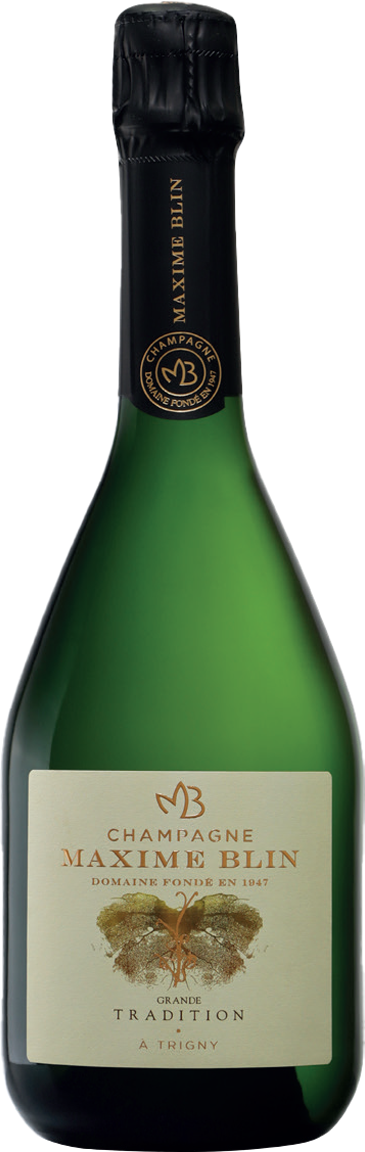
Champagne Brut 'Grande Tradition' Maxime BlinThe 'Grande Tradition' Brut Champagne from the French company Maxime Blin is a Champagne with a classic and refined style, reflecting the identity of the winery. This label is part of the 'Les Fondamentales' collection, a selection that brings together historical cuvées that fully embody the style of the Blin family, each focusing on a specific grape variety. In this particular case, the 'Grande Tradition' highlights the qualities of the Chardonnay cultivated in the Trigny area.The 'Grande Tradition' Maxime Blin Champagne comes from a blend of Chardonnay (90%) and Pinot Noir (10%) grapes grown under certified organic cultivation in the village of Trigny, within the Montagne de Reims area. Here, the vines enjoy excellent southern and south-eastern exposure and the sandy, clay-limestone soil matrix. Following the harvest, the grapes are subjected to a gentle pressing using a Coquard press, with the must thus obtained being transferred to stainless steel tanks for temperature-controlled alcoholic fermentation and subsequent complete malolactic fermentation. The vintage wine is then combined with 30% vins de réserve before bottle fermentation according to the Champenoise Method, combined with 36 months of maturation sur lattes. This is followed by dégorgement and final dosage as Extra Brut, with 4 g/l residual sugar.The 'Grande Tradition' Champagne Maxime Blin has a luminous straw yellow colour with a fine and persistent perlage. The aromatic bouquet expresses fragrant scents of citrus fruits and white flowers, surrounded by memories of bakery and mineral nuances. The taste is fresh, elegant and balanced, with a pleasant savoury trail that rests on a long citrus and mineral finish.57,00 £*Shipping: 48,00 £Secure redirect to the provider


-
How does Hinduism differ from Buddhism now?
Hinduism and Buddhism have evolved differently over time, with distinct beliefs and practices. Hinduism continues to emphasize the importance of rituals, caste system, and the worship of multiple deities, while Buddhism focuses on the Four Noble Truths, the Eightfold Path, and the concept of non-attachment. Additionally, Hinduism has a strong emphasis on the concept of dharma (duty/righteousness), while Buddhism emphasizes the idea of achieving enlightenment and liberation from suffering. Despite their differences, both religions share common roots in Indian philosophy and continue to influence each other in various ways. **
-
What do Hinduism and Buddhism have in common?
Hinduism and Buddhism share several similarities, such as the belief in karma and reincarnation. Both religions emphasize the importance of meditation and self-awareness in achieving spiritual enlightenment. Additionally, they both advocate for non-violence and compassion towards all living beings. Despite their differences in certain beliefs and practices, Hinduism and Buddhism both ultimately seek to help individuals attain liberation from the cycle of birth and death. **
-
What quotes are there about Hinduism and Buddhism?
There are many quotes about Hinduism and Buddhism that reflect their teachings and philosophies. Some examples include: "The mind is everything. What you think you become." - Buddha; "The soul is the same in all living creatures, although the body of each is different." - Hindu scripture Bhagavad Gita; "Thousands of candles can be lighted from a single candle, and the life of the candle will not be shortened. Happiness never decreases by being shared." - Buddha. These quotes emphasize the importance of self-awareness, compassion, and interconnectedness in both Hinduism and Buddhism. **
-
What is the difference between Buddhism and Hinduism?
Buddhism and Hinduism are two distinct religions that originated in ancient India. One key difference is that Buddhism was founded by Siddhartha Gautama, also known as the Buddha, while Hinduism has no single founder. Another difference is that Buddhism does not believe in the existence of a permanent soul, whereas Hinduism believes in the concept of an eternal soul or atman that undergoes reincarnation. Additionally, Buddhism emphasizes the Four Noble Truths and the Eightfold Path as the means to achieve enlightenment, while Hinduism encompasses a wide range of beliefs, practices, and deities. **


What is the difference between Hinduism and Buddhism?
Hinduism and Buddhism are two distinct religions that originated in ancient India. One key difference is that Hinduism believes in the existence of a supreme being or ultimate reality (Brahman), while Buddhism does not focus on the concept of a creator god. Additionally, Hinduism emphasizes the caste system and the performance of rituals, while Buddhism rejects the caste system and emphasizes the importance of personal spiritual development and enlightenment through practices like meditation. Finally, Hinduism believes in the eternal soul (atman) that undergoes reincarnation, while Buddhism teaches the concept of non-self (anatta) and the cycle of rebirth (samsara) without a permanent soul. **
How is euthanasia viewed in Hinduism and Buddhism?
In Hinduism, euthanasia is generally viewed as unacceptable because it goes against the belief in the sanctity of life and the concept of karma, which dictates that one must live out their full life span. However, some Hindu scholars argue that in cases of extreme suffering or terminal illness, euthanasia may be permissible as a form of mercy killing. In Buddhism, euthanasia is also generally discouraged as it goes against the first precept of not harming any living being. Buddhists believe in the importance of accepting and facing suffering as a part of life, and that euthanasia may interfere with the natural process of death and rebirth. **
Top-Angebote
Products related to Hinduism:
-
Swami Mukundananda RUPA-Spiritual Secrets from Hinduism: Essence of the Vedic ScripturesDescription. Condition: BRAND NEW. Format: Paperback. Seekers the world over intuitively perceive India as the land of spirituality. As such, there exists an inherent curiosity to understand its ancient knowledge systems through Hinduism. In its heritage are the rarest of holy treasures revealed to the rishis of yore through mystical practices and divine grace.. Title. RUPA-Spiritual Secrets from Hinduism: Essence of the Vedic Scriptures. Delivery. Content. Reviews10,99 £*Shipping: 2,99 £Secure redirect to the provider
-
Borin Van Loon & Boris Wiseman A Graphic Guide Introducing 6 Books Collection Set - Descartes, Shakespeare, Hinduism & More - Non Fiction - PaperbackTitles in This Set:. Introducing Time. Introducing Shakespeare. Introducing Mathematics. Introducing Islam. Introducing Hinduism. Introducing Descartes Condition: BRAND NEW. Format: Paperback Overview:. Meet a six-book collection that makes big ideas approachable through the inviting, illustrated language of graphic guides. This paperback set blends concise narrative, clear diagrams, and playful visuals to illuminate time, language and literature, mathematics, world religions, philosophical thought, and history. Each title stands alone as a confident primer, yet together they form a cohesive, cross-disciplinary journey designed for curious minds, students, teachers, and lifelong learners. Whether you’re revising for exams, exploring new subjects for personal interest, or seeking a readily giftable starter set for a student or reader, this collection delivers approachable explanations without sacrificing accuracy. It’s the ideal “complete series” for readers who crave clarity, colour, and context as they navigate complex ideas across science, humanities, and culture. What Makes This Collection Special:. This collection stands out because it multiplies the power of bite-sized explanations across six essential domains. The graphic format translates dense concepts into visuals that spark retention and spark discussion, while the consistent design across titles creates a friendly reading rhythm. Readers gain a broad literacy—from the abstract questions of time to the historical arc of Islam and Hinduism, from the precision of mathematics to the enduring artistry of Shakespeare, to the bold questions posed by Descartes. The set is perfect for building a practical curiosity—great for revision, classroom discussion, BookTok recommendations, and smart gifting that says you value learning as a shared, joyful pursuit. Books Included in This Collection:. Introducing Time. Is time a fourth dimension like space, or does it flow in its own unique way? This accessible guide probes whether the future exists, if time travel is possible, and why moments seem to slip by in one direction. With crisp diagrams and concise explanations, it distills physics and philosophy into topics you can discuss at a glance, making it ideal for students, teens, and adults exploring the nature of reality without getting lost in jargon. Introducing Shakespeare. Discover how Shakespeare ascended to global fame and why his works endure as the pinnacle of English literature. This guide traces the forces that elevated the Bard—from theatre and market performances to translations and reinterpretations across generations and cultures. Engaging visuals illuminate plot devices, language, and character, while approachable context helps readers grasp why Shakespeare’s drama and poetry still resonate on stages and pages worldwide. Introducing Mathematics. Mathematics is presented as a grand human achievement that quietly shapes daily life. From geometry and algebra to trigonometry and beyond,...18,99 £*Shipping: 2,99 £Secure redirect to the provider
-
Icon Books Introducing Graphic Guides 6 Book Set - Hinduism, Levi-Strauss, Infinity, Keynes, Machiavelli, Melanie Klein - Illustrated Non-Fiction - PaperbackDiscover a comprehensive collection of six books from Icon Books' Introducing... A Graphic Guide series. This set includes accessible introductions to Hinduism, Levi-Strauss and structural anthropology, infinity, Keynes, Machiavelli, and Melanie Klein, all presented in a clear and engaging format. The books are ideal for students, book clubs, and curious readers who want to explore big ideas in religion, anthropology, mathematics, economics, and psychoanalysis without getting bogged down in dense academic texts. The series pairs witty illustrations with concise text to make complex subjects more approachable. The books are new, published in paperback format, and suitable for adult readers.15,49 £*Shipping: 2,99 £Secure redirect to the provider
-
Does Buddhism belong to Hinduism?
Buddhism originated from the teachings of Siddhartha Gautama, who was born and raised in a Hindu cultural context. While Buddhism shares some common philosophical and cultural elements with Hinduism, it is considered a distinct religion with its own beliefs, practices, and traditions. Therefore, while Buddhism has historical and cultural connections to Hinduism, it is a separate and independent religion. **
-
Are Buddhism and Hinduism related?
Yes, Buddhism and Hinduism are related in several ways. Both religions originated in ancient India and share some common cultural and philosophical roots. Additionally, Buddhism emerged as a reform movement within the context of Hinduism, and many of its early followers were originally Hindu. While there are significant differences in their beliefs and practices, both religions share concepts such as karma, dharma, and the cycle of birth and rebirth. Despite these similarities, Buddhism eventually developed into a distinct religion with its own teachings and practices. **
-
How does Hinduism differ from Buddhism now?
Hinduism and Buddhism have evolved differently over time, with distinct beliefs and practices. Hinduism continues to emphasize the importance of rituals, caste system, and the worship of multiple deities, while Buddhism focuses on the Four Noble Truths, the Eightfold Path, and the concept of non-attachment. Additionally, Hinduism has a strong emphasis on the concept of dharma (duty/righteousness), while Buddhism emphasizes the idea of achieving enlightenment and liberation from suffering. Despite their differences, both religions share common roots in Indian philosophy and continue to influence each other in various ways. **
-
What do Hinduism and Buddhism have in common?
Hinduism and Buddhism share several similarities, such as the belief in karma and reincarnation. Both religions emphasize the importance of meditation and self-awareness in achieving spiritual enlightenment. Additionally, they both advocate for non-violence and compassion towards all living beings. Despite their differences in certain beliefs and practices, Hinduism and Buddhism both ultimately seek to help individuals attain liberation from the cycle of birth and death. **
Similar search terms for Hinduism
-
Champagne Brut 'Grande Tradition' Maxime BlinThe 'Grande Tradition' Brut Champagne from the French company Maxime Blin is a Champagne with a classic and refined style, reflecting the identity of the winery. This label is part of the 'Les Fondamentales' collection, a selection that brings together historical cuvées that fully embody the style of the Blin family, each focusing on a specific grape variety. In this particular case, the 'Grande Tradition' highlights the qualities of the Chardonnay cultivated in the Trigny area.The 'Grande Tradition' Maxime Blin Champagne comes from a blend of Chardonnay (90%) and Pinot Noir (10%) grapes grown under certified organic cultivation in the village of Trigny, within the Montagne de Reims area. Here, the vines enjoy excellent southern and south-eastern exposure and the sandy, clay-limestone soil matrix. Following the harvest, the grapes are subjected to a gentle pressing using a Coquard press, with the must thus obtained being transferred to stainless steel tanks for temperature-controlled alcoholic fermentation and subsequent complete malolactic fermentation. The vintage wine is then combined with 30% vins de réserve before bottle fermentation according to the Champenoise Method, combined with 36 months of maturation sur lattes. This is followed by dégorgement and final dosage as Extra Brut, with 4 g/l residual sugar.The 'Grande Tradition' Champagne Maxime Blin has a luminous straw yellow colour with a fine and persistent perlage. The aromatic bouquet expresses fragrant scents of citrus fruits and white flowers, surrounded by memories of bakery and mineral nuances. The taste is fresh, elegant and balanced, with a pleasant savoury trail that rests on a long citrus and mineral finish.57,00 £*Shipping: 48,00 £Secure redirect to the provider
-
Champagne Brut Grand Cru 'Tradition' GatinoisChampagne Gatinois Brut Grand Cru 'Tradition' reflects the structure and expressive depth of Champagne from Aÿ, a Grand Cru village located in the Vallée de la Marne, a few kilometres from Epernay. The village, where Pinot Noir reigns supreme with almost 90% of the entire vineyard area, is the largest of the Champagne villages with more than 4,000 inhabitants. Already famous in ancient times for the quality of its still wines, Aÿ is today established among the largest territories in all of Champagne for the cultivation of Pinot Noir.The Brut Grand Cru Champagne Gatinois 'Tradition' consists of a blend of Pinot Noir (80%) and Chardonnay (20%) grapes, varieties cultivated within the Grand Cru village of Aÿ on soils with a strong chalk component. In the cellar, the grapes undergo a soft pressing, followed by the alcoholic fermentation of the must and then the maturation of the vintage wine for a few months, which is then blended with 30% vin de reserve in the preparation of the sparkling wine base. This is followed by bottle fermentation according to the Champenoise Method, combined with at least 24-30 months of maturation on the lees in glass. This is followed by degorgement and final dosage as Brut, at 7 g/l residual sugar.The Champagne 'Tradition' Brut Grand Cru from the Gatinois sparkling wine company has a light, brilliant straw yellow colour with a refined perlage. Fresh aromas of pear, lime and white flowers emerge from the glass, supported by anelegant mineral timbre and deep hints of brioche and toasted hints. All complemented by the vinous note typical of Pinot Noir. Taste development endowed with excellent freshness and sapidity, with a good persistence in which the sensations previously perceived on the nose reappear.42,00 £*Shipping: 48,00 £Secure redirect to the provider
-
Daniel Coyle Collection 3 Books Set Talent Code, Culture Code, Culture PlaybookDescription:. Condition: BRAND NEW. Format: Paperback. The Talent Code: Greatness isn't born. It's grown. In The Talent Code, award-winning journalist Daniel Coyle draws on cutting-edge research to reveal that, far from being some abstract mystical power fixed at birth, ability really can be created and nurtured.In the process, he considers talent at work in venues as diverse as a music school in Dallas and a tennis academy near Moscow to demonstrate how the wiring of our brains can be transformed by the way we approach particular tasks. He explains what is really going on when apparently unremarkable people suddenly make a major leap forward. He reveals why some teaching methods are so much more effective than others. Above all, he shows how all of us can achieve our full potential if we set about training our brains in the right way..... The Culture Code: The Secrets of Highly Successful Groups. The Culture Code reveals the secrets of some of the best teams in the world - from Pixar to Google to US Navy SEALs - explaining the three skills such groups have mastered in order to generate trust and a willingness to collaborate. Combining cutting-edge science, on-the-ground insight and practical ideas for action, it offers a roadmap for creating an environment where innovation flourishes, problems get solved, and expectations are exceeded..... The Culture Playbook: 60 Highly Effective Actions to Help Your Group Succeed.... What is great culture made of? How do you get more of it, or turn around a group that needs improving? In The Culture Playbook, Daniel Coyle delivers a field-tested guide for building strong, cohesive, high-performing groups.Coyle, author of the New York Times bestselling The Culture Code, has spent the last six years studying and consulting with some of the most successful groups on the planet - including Pixar, Navy SEALS Team 6 and others. Here, he distils his findings into 60 concise, actionable, scientifically proven tips for building safety, generating trust, and establishing purpose - plus a set of conversation-igniting exercises to help you assess and improve your current culture.The result is a book that will sharpen the skills of any leader and strengthen the cohesion of any team - because it demonstrates that great culture is not controlled by fate or luck; it's controlled by you..... Title. Daniel Coyle Collection 3 Books Set Talent Code, Culture Code,Culture Playbook. Delivery. Content. Reviews30,99 £*Shipping: 2,99 £Secure redirect to the provider
-
What quotes are there about Hinduism and Buddhism?
There are many quotes about Hinduism and Buddhism that reflect their teachings and philosophies. Some examples include: "The mind is everything. What you think you become." - Buddha; "The soul is the same in all living creatures, although the body of each is different." - Hindu scripture Bhagavad Gita; "Thousands of candles can be lighted from a single candle, and the life of the candle will not be shortened. Happiness never decreases by being shared." - Buddha. These quotes emphasize the importance of self-awareness, compassion, and interconnectedness in both Hinduism and Buddhism. **
-
What is the difference between Buddhism and Hinduism?
Buddhism and Hinduism are two distinct religions that originated in ancient India. One key difference is that Buddhism was founded by Siddhartha Gautama, also known as the Buddha, while Hinduism has no single founder. Another difference is that Buddhism does not believe in the existence of a permanent soul, whereas Hinduism believes in the concept of an eternal soul or atman that undergoes reincarnation. Additionally, Buddhism emphasizes the Four Noble Truths and the Eightfold Path as the means to achieve enlightenment, while Hinduism encompasses a wide range of beliefs, practices, and deities. **
-
What is the difference between Hinduism and Buddhism?
Hinduism and Buddhism are two distinct religions that originated in ancient India. One key difference is that Hinduism believes in the existence of a supreme being or ultimate reality (Brahman), while Buddhism does not focus on the concept of a creator god. Additionally, Hinduism emphasizes the caste system and the performance of rituals, while Buddhism rejects the caste system and emphasizes the importance of personal spiritual development and enlightenment through practices like meditation. Finally, Hinduism believes in the eternal soul (atman) that undergoes reincarnation, while Buddhism teaches the concept of non-self (anatta) and the cycle of rebirth (samsara) without a permanent soul. **
-
How is euthanasia viewed in Hinduism and Buddhism?
In Hinduism, euthanasia is generally viewed as unacceptable because it goes against the belief in the sanctity of life and the concept of karma, which dictates that one must live out their full life span. However, some Hindu scholars argue that in cases of extreme suffering or terminal illness, euthanasia may be permissible as a form of mercy killing. In Buddhism, euthanasia is also generally discouraged as it goes against the first precept of not harming any living being. Buddhists believe in the importance of accepting and facing suffering as a part of life, and that euthanasia may interfere with the natural process of death and rebirth. **
* All prices are inclusive of VAT and, if applicable, plus shipping costs. The offer information is based on the details provided by the respective shop and is updated through automated processes. Real-time updates do not occur, so deviations can occur in individual cases. ** Note: Parts of this content were created by AI.