Buy kalmykia.eu ?
We are moving the project
kalmykia.eu .
Are you interested in purchasing the domain
kalmykia.eu ?
domain@kv-gmbh.de · 0541-91531010
Buy kalmykia.eu ?
What is the significance of the formula tradition in theology?
The formula tradition in theology is significant because it provides a framework for understanding and interpreting religious beliefs and doctrines. These formulas, often expressed in creeds or statements of faith, serve as a foundation for theological discourse and help to maintain doctrinal unity within religious communities. Additionally, the formula tradition allows for continuity and consistency in theological teachings across different generations and cultural contexts. It also provides a basis for theological dialogue and debate, as theologians can engage with and interpret these formulas in light of contemporary issues and developments. **
Isn't theology unscientific?
Theology is the study of the nature of the divine and religious beliefs. While theology is not a science in the traditional sense, it is a legitimate academic discipline that seeks to understand and interpret religious beliefs and practices. Theology uses philosophical, historical, and cultural methods to explore questions of meaning, morality, and the nature of existence. While theology may not adhere to the same empirical methods as the natural sciences, it still provides valuable insights into the human experience and the diversity of religious traditions. **


Similar search terms for Theology
Top-Angebote
Products related to Theology:
-
Jerry Saltz, Makoto Fujimura How to Be an Artist Jerry Saltz, Art and Faith A Theology of Making 2 Books SetDescription. How to Be an Artist: The New York Times bestseller by Jerry Saltz.... As the witty and passionate chief art critic for New York magazine, Jerry Saltz is often approached by artists, both amateur and professional, asking him for advice: How do I get started? How do I get better? Is what I'm doing even art at all? They want to know, in short, how to be an artist. Now, expanding on his viral cover story for New York magazine - and drawing on his decades of immersion in the art world - Saltz has the answers. How to Be An Artist is an indispensable book of practical inspiration for creative people of all kinds. Brimming with dozens of brand new rules, prompts, exercises, and tips designed to break through creative blocks, ignite motivation, and conquer bad habits, this book is designed to help artists of all kinds - painters, photographers, writers, performers - realize their dreams.. Art and Faith: A Theology of Making by Makoto Fujimura, N. T. Wright.... Conceived over thirty years of painting and creating in his studio, this book is Makoto Fujimura’s broad and deep exploration of creativity and the spiritual aspects of “making.” What he does in the studio is theological work as much as it is aesthetic work. In between pouring precious, pulverized minerals onto handmade paper to create the prismatic, refractive surfaces of his art, he comes into the quiet space in the studio in a discipline of awareness, waiting, prayer, and praise. Ranging from the Bible to T. S. Eliot, Mark Rothko, and Japanese Kintsugi technique, he shows how, unless we are making something, we cannot know the depth of God’s being and God’s grace permeating our lives. This poignant and beautiful book offers the perspective of, in Christian Wiman’s words, an “accidental theologian,” one who comes to spiritual questions always through the prism of art..... Title. How to Be an Artist Jerry Saltz, Art and Faith A Theology of Making 2 Books Set. Delivery. Content. Reviews99,99 £*Shipping: 0,00 £Secure redirect to the provider
-
Makoto Fujimura, N. T. Wright, Jerry Saltz How to Be an Artist, Art and Faith A Theology of Making 2 Books Collection SetDescription. How to Be an Artist: The New York Times bestseller by Jerry Saltz. As the witty and passionate chief art critic for New York magazine, Jerry Saltz is often approached by artists, both amateur and professional, asking him for advice: How do I get started? How do I get better? Is what I'm doing even art at all? They want to know, in short, how to be an artist. Now, expanding on his viral cover story for New York magazine - and drawing on his decades of immersion in the art world - Saltz has the answers. How to Be An Artist is an indispensable book of practical inspiration for creative people of all kinds. Brimming with dozens of brand new rules, prompts, exercises, and tips designed to break through creative blocks, ignite motivation, and conquer bad habits, this book is designed to help artists of all kinds - painters, photographers, writers, performers - realize their dreams.. Art and Faith: A Theology of Making by Makoto Fujimura, N. T. Wright. Conceived over thirty years of painting and creating in his studio, this book is Makoto Fujimura’s broad and deep exploration of creativity and the spiritual aspects of “making.” What he does in the studio is theological work as much as it is aesthetic work. In between pouring precious, pulverized minerals onto handmade paper to create the prismatic, refractive surfaces of his art, he comes into the quiet space in the studio in a discipline of awareness, waiting, prayer, and praise. Ranging from the Bible to T. S. Eliot, Mark Rothko, and Japanese Kintsugi technique, he shows how, unless we are making something, we cannot know the depth of God’s being and God’s grace permeating our lives. This poignant and beautiful book offers the perspective of, in Christian Wiman’s words, an “accidental theologian,” one who comes to spiritual questions always through the prism of art.. Title. How to Be an Artist, Art and Faith A Theology of Making 2 Books Collection Set. Delivery. Content. Reviews99,99 £*Shipping: 0,00 £Secure redirect to the provider


-
What is Islamic theology?
Islamic theology is the study and interpretation of the beliefs and principles of Islam. It encompasses the understanding of the nature of God, the prophethood of Muhammad, the Quran, and the teachings and practices of Islam. Islamic theology also explores concepts such as the afterlife, divine predestination, and the nature of faith and good deeds. It is a central aspect of Islamic scholarship and plays a crucial role in shaping the beliefs and practices of Muslims. **
-
What does theology mean?
Theology is the study of the nature of the divine, religious beliefs, and the practice of religion. It involves exploring and understanding the beliefs, practices, and teachings of a particular religion or religious tradition. Theology seeks to deepen one's understanding of the divine, address questions about the meaning and purpose of life, and explore the relationship between humanity and the divine. It is a discipline that is often pursued by scholars, clergy, and individuals seeking to deepen their spiritual understanding. **
-
Is studying theology difficult?
Studying theology can be challenging for some people due to the complex and abstract nature of the subject matter. It requires critical thinking, analytical skills, and the ability to engage with philosophical and ethical concepts. Additionally, theology often involves the study of ancient texts and languages, which can be difficult to understand and interpret. However, for those with a passion for the subject, the intellectual and spiritual rewards of studying theology can make the effort worthwhile. **
-
Why can one study theology?
One can study theology to gain a deeper understanding of religious beliefs, practices, and traditions. By studying theology, individuals can explore the historical and cultural contexts of different religions, as well as examine the philosophical and ethical implications of religious teachings. Additionally, studying theology can help individuals develop critical thinking skills and engage in meaningful dialogue with people of diverse religious backgrounds. **

Why do people study theology?
People study theology for a variety of reasons. Some study it to deepen their understanding of their faith and beliefs, while others study it to explore different religious traditions and perspectives. The study of theology can also provide insights into the history, culture, and values of different societies. Additionally, some people study theology to pursue a career in religious leadership, education, or counseling. **
Are there unbelieving theology students?
Yes, there are unbelieving theology students. Some individuals may choose to study theology for academic or intellectual reasons rather than out of personal religious belief. These students may be interested in exploring the history, philosophy, and cultural impact of religion without necessarily subscribing to its beliefs. Additionally, some theology students may have grown up in a religious tradition but have since become atheists or agnostics, yet still pursue theological studies out of curiosity or a desire to understand different worldviews. **
Top-Angebote
Products related to Theology:
-
Art and Faith: A Theology of Making By Makoto FujimuraDescription. Conceived over thirty years of painting and creating in his studio, this book is Makoto Fujimura’s broad and deep exploration of creativity and the spiritual aspects of “making.” What he does in the studio is theological work as much as it is aesthetic work. In between pouring precious, pulverized minerals onto handmade paper to create the prismatic, refractive surfaces of his art, he comes into the quiet space in the studio in a discipline of awareness, waiting, prayer, and praise.. Title. Art and Faith: A Theology of Making. Delivery. Content. Reviews99,99 £*Shipping: 0,00 £Secure redirect to the provider
-
Josef Albers, Makoto Fujimura Interaction of Color Josef Alber, Art and Faith A Theology of Making 2 Books SetDescription. Titles in this Set :. Art and Faith A Theology of Making [Hardcover]. Interaction of Color. Art and Faith A Theology of Making [Hardcover]. Conceived over thirty years of painting and creating in his studio, this book is Makoto Fujimura’s broad and deep exploration of creativity and the spiritual aspects of “making.” What he does in the studio is theological work as much as it is aesthetic work. In between pouring precious, pulverized minerals onto handmade paper to create the prismatic, refractive surfaces of his art, he comes into the quiet space in the studio in a discipline of awareness, waiting, prayer, and praise.. Interaction of Color. Josef Albers’s classic Interaction of Color is a masterwork in art education. Conceived as a handbook and teaching aid for artists, instructors, and students, this influential book presents Albers’s singular explanation of complex color theory principles. Originally published by Yale University Press in 1963 as a limited silkscreen edition with 150 color plates, Interaction of Color first appeared in paperback in 1971, featuring ten color studies chosen by Albers, and has remained in print ever since. With over a quarter of a million copies sold in its various editions since 1963, Interaction of Color remains an essential resource on color, as pioneering today as when Albers created it.. Title. Interaction of Color Josef Alber, Art and Faith A Theology of Making 2 Books Set. Delivery. Content. Reviews99,99 £*Shipping: 0,00 £Secure redirect to the provider
-
Jerry Saltz, Makoto Fujimura How to Be an Artist Jerry Saltz, Art and Faith A Theology of Making 2 Books SetDescription. How to Be an Artist: The New York Times bestseller by Jerry Saltz.... As the witty and passionate chief art critic for New York magazine, Jerry Saltz is often approached by artists, both amateur and professional, asking him for advice: How do I get started? How do I get better? Is what I'm doing even art at all? They want to know, in short, how to be an artist. Now, expanding on his viral cover story for New York magazine - and drawing on his decades of immersion in the art world - Saltz has the answers. How to Be An Artist is an indispensable book of practical inspiration for creative people of all kinds. Brimming with dozens of brand new rules, prompts, exercises, and tips designed to break through creative blocks, ignite motivation, and conquer bad habits, this book is designed to help artists of all kinds - painters, photographers, writers, performers - realize their dreams.. Art and Faith: A Theology of Making by Makoto Fujimura, N. T. Wright.... Conceived over thirty years of painting and creating in his studio, this book is Makoto Fujimura’s broad and deep exploration of creativity and the spiritual aspects of “making.” What he does in the studio is theological work as much as it is aesthetic work. In between pouring precious, pulverized minerals onto handmade paper to create the prismatic, refractive surfaces of his art, he comes into the quiet space in the studio in a discipline of awareness, waiting, prayer, and praise. Ranging from the Bible to T. S. Eliot, Mark Rothko, and Japanese Kintsugi technique, he shows how, unless we are making something, we cannot know the depth of God’s being and God’s grace permeating our lives. This poignant and beautiful book offers the perspective of, in Christian Wiman’s words, an “accidental theologian,” one who comes to spiritual questions always through the prism of art..... Title. How to Be an Artist Jerry Saltz, Art and Faith A Theology of Making 2 Books Set. Delivery. Content. Reviews99,99 £*Shipping: 0,00 £Secure redirect to the provider
-
Makoto Fujimura, N. T. Wright, Jerry Saltz How to Be an Artist, Art and Faith A Theology of Making 2 Books Collection SetDescription. How to Be an Artist: The New York Times bestseller by Jerry Saltz. As the witty and passionate chief art critic for New York magazine, Jerry Saltz is often approached by artists, both amateur and professional, asking him for advice: How do I get started? How do I get better? Is what I'm doing even art at all? They want to know, in short, how to be an artist. Now, expanding on his viral cover story for New York magazine - and drawing on his decades of immersion in the art world - Saltz has the answers. How to Be An Artist is an indispensable book of practical inspiration for creative people of all kinds. Brimming with dozens of brand new rules, prompts, exercises, and tips designed to break through creative blocks, ignite motivation, and conquer bad habits, this book is designed to help artists of all kinds - painters, photographers, writers, performers - realize their dreams.. Art and Faith: A Theology of Making by Makoto Fujimura, N. T. Wright. Conceived over thirty years of painting and creating in his studio, this book is Makoto Fujimura’s broad and deep exploration of creativity and the spiritual aspects of “making.” What he does in the studio is theological work as much as it is aesthetic work. In between pouring precious, pulverized minerals onto handmade paper to create the prismatic, refractive surfaces of his art, he comes into the quiet space in the studio in a discipline of awareness, waiting, prayer, and praise. Ranging from the Bible to T. S. Eliot, Mark Rothko, and Japanese Kintsugi technique, he shows how, unless we are making something, we cannot know the depth of God’s being and God’s grace permeating our lives. This poignant and beautiful book offers the perspective of, in Christian Wiman’s words, an “accidental theologian,” one who comes to spiritual questions always through the prism of art.. Title. How to Be an Artist, Art and Faith A Theology of Making 2 Books Collection Set. Delivery. Content. Reviews99,99 £*Shipping: 0,00 £Secure redirect to the provider
-
What is the significance of the formula tradition in theology?
The formula tradition in theology is significant because it provides a framework for understanding and interpreting religious beliefs and doctrines. These formulas, often expressed in creeds or statements of faith, serve as a foundation for theological discourse and help to maintain doctrinal unity within religious communities. Additionally, the formula tradition allows for continuity and consistency in theological teachings across different generations and cultural contexts. It also provides a basis for theological dialogue and debate, as theologians can engage with and interpret these formulas in light of contemporary issues and developments. **
-
Isn't theology unscientific?
Theology is the study of the nature of the divine and religious beliefs. While theology is not a science in the traditional sense, it is a legitimate academic discipline that seeks to understand and interpret religious beliefs and practices. Theology uses philosophical, historical, and cultural methods to explore questions of meaning, morality, and the nature of existence. While theology may not adhere to the same empirical methods as the natural sciences, it still provides valuable insights into the human experience and the diversity of religious traditions. **
-
What is Islamic theology?
Islamic theology is the study and interpretation of the beliefs and principles of Islam. It encompasses the understanding of the nature of God, the prophethood of Muhammad, the Quran, and the teachings and practices of Islam. Islamic theology also explores concepts such as the afterlife, divine predestination, and the nature of faith and good deeds. It is a central aspect of Islamic scholarship and plays a crucial role in shaping the beliefs and practices of Muslims. **
-
What does theology mean?
Theology is the study of the nature of the divine, religious beliefs, and the practice of religion. It involves exploring and understanding the beliefs, practices, and teachings of a particular religion or religious tradition. Theology seeks to deepen one's understanding of the divine, address questions about the meaning and purpose of life, and explore the relationship between humanity and the divine. It is a discipline that is often pursued by scholars, clergy, and individuals seeking to deepen their spiritual understanding. **
Similar search terms for Theology
-
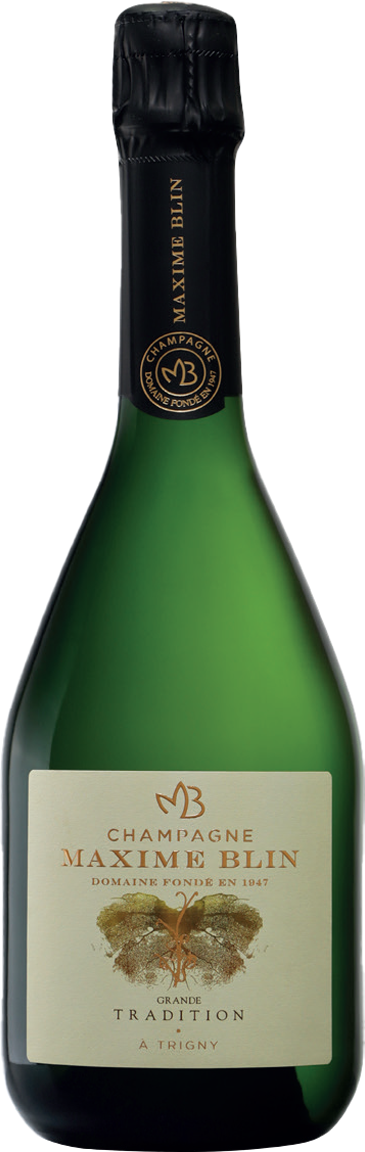
Champagne Brut 'Grande Tradition' Maxime BlinThe 'Grande Tradition' Brut Champagne from the French company Maxime Blin is a Champagne with a classic and refined style, reflecting the identity of the winery. This label is part of the 'Les Fondamentales' collection, a selection that brings together historical cuvées that fully embody the style of the Blin family, each focusing on a specific grape variety. In this particular case, the 'Grande Tradition' highlights the qualities of the Chardonnay cultivated in the Trigny area.The 'Grande Tradition' Maxime Blin Champagne comes from a blend of Chardonnay (90%) and Pinot Noir (10%) grapes grown under certified organic cultivation in the village of Trigny, within the Montagne de Reims area. Here, the vines enjoy excellent southern and south-eastern exposure and the sandy, clay-limestone soil matrix. Following the harvest, the grapes are subjected to a gentle pressing using a Coquard press, with the must thus obtained being transferred to stainless steel tanks for temperature-controlled alcoholic fermentation and subsequent complete malolactic fermentation. The vintage wine is then combined with 30% vins de réserve before bottle fermentation according to the Champenoise Method, combined with 36 months of maturation sur lattes. This is followed by dégorgement and final dosage as Extra Brut, with 4 g/l residual sugar.The 'Grande Tradition' Champagne Maxime Blin has a luminous straw yellow colour with a fine and persistent perlage. The aromatic bouquet expresses fragrant scents of citrus fruits and white flowers, surrounded by memories of bakery and mineral nuances. The taste is fresh, elegant and balanced, with a pleasant savoury trail that rests on a long citrus and mineral finish.57,00 £*Shipping: 48,00 £Secure redirect to the provider
-
Champagne Brut Grand Cru 'Tradition' GatinoisChampagne Gatinois Brut Grand Cru 'Tradition' reflects the structure and expressive depth of Champagne from Aÿ, a Grand Cru village located in the Vallée de la Marne, a few kilometres from Epernay. The village, where Pinot Noir reigns supreme with almost 90% of the entire vineyard area, is the largest of the Champagne villages with more than 4,000 inhabitants. Already famous in ancient times for the quality of its still wines, Aÿ is today established among the largest territories in all of Champagne for the cultivation of Pinot Noir.The Brut Grand Cru Champagne Gatinois 'Tradition' consists of a blend of Pinot Noir (80%) and Chardonnay (20%) grapes, varieties cultivated within the Grand Cru village of Aÿ on soils with a strong chalk component. In the cellar, the grapes undergo a soft pressing, followed by the alcoholic fermentation of the must and then the maturation of the vintage wine for a few months, which is then blended with 30% vin de reserve in the preparation of the sparkling wine base. This is followed by bottle fermentation according to the Champenoise Method, combined with at least 24-30 months of maturation on the lees in glass. This is followed by degorgement and final dosage as Brut, at 7 g/l residual sugar.The Champagne 'Tradition' Brut Grand Cru from the Gatinois sparkling wine company has a light, brilliant straw yellow colour with a refined perlage. Fresh aromas of pear, lime and white flowers emerge from the glass, supported by anelegant mineral timbre and deep hints of brioche and toasted hints. All complemented by the vinous note typical of Pinot Noir. Taste development endowed with excellent freshness and sapidity, with a good persistence in which the sensations previously perceived on the nose reappear.42,00 £*Shipping: 48,00 £Secure redirect to the provider
-
Is studying theology difficult?
Studying theology can be challenging for some people due to the complex and abstract nature of the subject matter. It requires critical thinking, analytical skills, and the ability to engage with philosophical and ethical concepts. Additionally, theology often involves the study of ancient texts and languages, which can be difficult to understand and interpret. However, for those with a passion for the subject, the intellectual and spiritual rewards of studying theology can make the effort worthwhile. **
-
Why can one study theology?
One can study theology to gain a deeper understanding of religious beliefs, practices, and traditions. By studying theology, individuals can explore the historical and cultural contexts of different religions, as well as examine the philosophical and ethical implications of religious teachings. Additionally, studying theology can help individuals develop critical thinking skills and engage in meaningful dialogue with people of diverse religious backgrounds. **
-
Why do people study theology?
People study theology for a variety of reasons. Some study it to deepen their understanding of their faith and beliefs, while others study it to explore different religious traditions and perspectives. The study of theology can also provide insights into the history, culture, and values of different societies. Additionally, some people study theology to pursue a career in religious leadership, education, or counseling. **
-
Are there unbelieving theology students?
Yes, there are unbelieving theology students. Some individuals may choose to study theology for academic or intellectual reasons rather than out of personal religious belief. These students may be interested in exploring the history, philosophy, and cultural impact of religion without necessarily subscribing to its beliefs. Additionally, some theology students may have grown up in a religious tradition but have since become atheists or agnostics, yet still pursue theological studies out of curiosity or a desire to understand different worldviews. **
* All prices are inclusive of VAT and, if applicable, plus shipping costs. The offer information is based on the details provided by the respective shop and is updated through automated processes. Real-time updates do not occur, so deviations can occur in individual cases. ** Note: Parts of this content were created by AI.