Buy kalmykia.eu ?
We are moving the project
kalmykia.eu .
Are you interested in purchasing the domain
kalmykia.eu ?
domain@kv-gmbh.de · 0541-91531010
Buy kalmykia.eu ?
Why is the acetone molecule a dipole molecule?
The acetone molecule is a dipole molecule because it has a region of partial positive charge and a region of partial negative charge. This is due to the difference in electronegativity between the carbon and oxygen atoms in the molecule. The oxygen atom is more electronegative than the carbon atom, causing it to attract the shared electrons more strongly and acquire a partial negative charge, while the carbon atom becomes partially positive. This unequal distribution of charge creates a dipole moment in the acetone molecule, making it a dipole molecule. **
Is octane a dipole molecule or a nonpolar molecule?
Octane is a nonpolar molecule. This is because it consists of only carbon and hydrogen atoms, which have similar electronegativities and therefore do not create a significant difference in charge distribution within the molecule. As a result, there is no separation of positive and negative charges, making it nonpolar. **


Similar search terms for Molecule
Top-Angebote
Products related to Molecule:
-
BenBella Books The Molecule of More: How a Single Chemical in Your Brain Drives Love, Sex, and Creativityand Will Determine the Fate of the Human RaceThe Molecule of More: How a Single Chemical in Your Brain Drives Love, Sex, and Creativityand Will Determine the Fate of the Human Race16,99 £*Shipping: 2,99 £Secure redirect to the provider
-
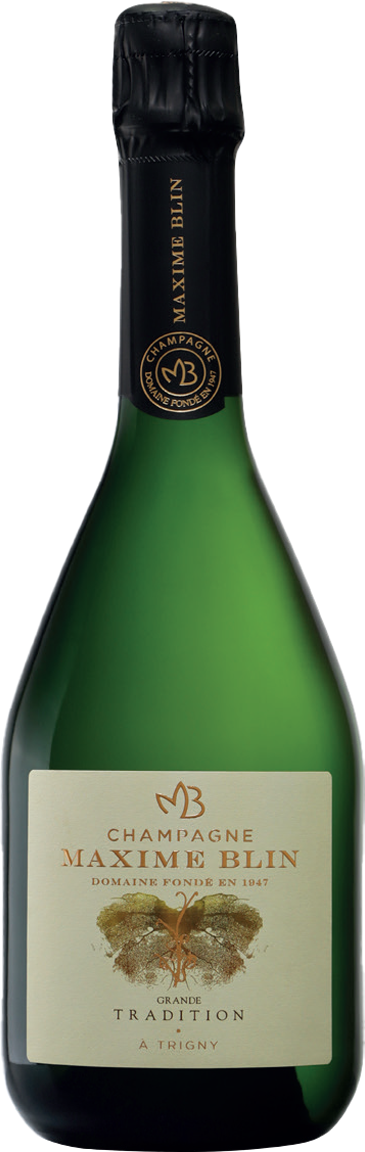
Champagne Brut 'Grande Tradition' Maxime BlinThe 'Grande Tradition' Brut Champagne from the French company Maxime Blin is a Champagne with a classic and refined style, reflecting the identity of the winery. This label is part of the 'Les Fondamentales' collection, a selection that brings together historical cuvées that fully embody the style of the Blin family, each focusing on a specific grape variety. In this particular case, the 'Grande Tradition' highlights the qualities of the Chardonnay cultivated in the Trigny area.The 'Grande Tradition' Maxime Blin Champagne comes from a blend of Chardonnay (90%) and Pinot Noir (10%) grapes grown under certified organic cultivation in the village of Trigny, within the Montagne de Reims area. Here, the vines enjoy excellent southern and south-eastern exposure and the sandy, clay-limestone soil matrix. Following the harvest, the grapes are subjected to a gentle pressing using a Coquard press, with the must thus obtained being transferred to stainless steel tanks for temperature-controlled alcoholic fermentation and subsequent complete malolactic fermentation. The vintage wine is then combined with 30% vins de réserve before bottle fermentation according to the Champenoise Method, combined with 36 months of maturation sur lattes. This is followed by dégorgement and final dosage as Extra Brut, with 4 g/l residual sugar.The 'Grande Tradition' Champagne Maxime Blin has a luminous straw yellow colour with a fine and persistent perlage. The aromatic bouquet expresses fragrant scents of citrus fruits and white flowers, surrounded by memories of bakery and mineral nuances. The taste is fresh, elegant and balanced, with a pleasant savoury trail that rests on a long citrus and mineral finish.57,00 £*Shipping: 48,00 £Secure redirect to the provider
-
Champagne Brut Grand Cru 'Tradition' GatinoisChampagne Gatinois Brut Grand Cru 'Tradition' reflects the structure and expressive depth of Champagne from Aÿ, a Grand Cru village located in the Vallée de la Marne, a few kilometres from Epernay. The village, where Pinot Noir reigns supreme with almost 90% of the entire vineyard area, is the largest of the Champagne villages with more than 4,000 inhabitants. Already famous in ancient times for the quality of its still wines, Aÿ is today established among the largest territories in all of Champagne for the cultivation of Pinot Noir.The Brut Grand Cru Champagne Gatinois 'Tradition' consists of a blend of Pinot Noir (80%) and Chardonnay (20%) grapes, varieties cultivated within the Grand Cru village of Aÿ on soils with a strong chalk component. In the cellar, the grapes undergo a soft pressing, followed by the alcoholic fermentation of the must and then the maturation of the vintage wine for a few months, which is then blended with 30% vin de reserve in the preparation of the sparkling wine base. This is followed by bottle fermentation according to the Champenoise Method, combined with at least 24-30 months of maturation on the lees in glass. This is followed by degorgement and final dosage as Brut, at 7 g/l residual sugar.The Champagne 'Tradition' Brut Grand Cru from the Gatinois sparkling wine company has a light, brilliant straw yellow colour with a refined perlage. Fresh aromas of pear, lime and white flowers emerge from the glass, supported by anelegant mineral timbre and deep hints of brioche and toasted hints. All complemented by the vinous note typical of Pinot Noir. Taste development endowed with excellent freshness and sapidity, with a good persistence in which the sensations previously perceived on the nose reappear.42,00 £*Shipping: 48,00 £Secure redirect to the provider



-
How does a hydrocarbon molecule react with an oxygen molecule?
When a hydrocarbon molecule reacts with an oxygen molecule, it undergoes a process called combustion. During combustion, the hydrocarbon molecule combines with the oxygen molecule to produce carbon dioxide and water, releasing energy in the form of heat and light. This reaction is exothermic, meaning it releases more energy than it consumes, making it a key process in many natural and industrial processes, such as burning fossil fuels for energy production. **
-
What is a molecule?
A molecule is a group of atoms bonded together, representing the smallest fundamental unit of a chemical compound that can take part in a chemical reaction. These atoms can be of the same element or different elements, and they are held together by chemical bonds. Molecules can vary in size and complexity, from simple diatomic molecules like oxygen (O2) to large and complex molecules like DNA. **
-
Ionic bond or molecule?
An ionic bond is formed when one atom transfers electrons to another atom, resulting in the formation of positively and negatively charged ions that are held together by electrostatic forces. On the other hand, a molecule is formed when two or more atoms share electrons to achieve a stable electron configuration. Therefore, the main difference between an ionic bond and a molecule is the way in which atoms are held together - through transfer of electrons in an ionic bond, and through sharing of electrons in a molecule. **
-
How can one recognize if a molecule is a dipole-dipole molecule?
One can recognize if a molecule is a dipole-dipole molecule by examining the electronegativity difference between the atoms in the molecule. If there is a significant difference in electronegativity between the atoms, causing an uneven distribution of electron density, the molecule is likely a dipole. Additionally, if the molecule has a symmetrical shape that cancels out the dipole moments of individual bonds, it is less likely to be a dipole-dipole molecule. Experimentally, dipole-dipole interactions can be identified through techniques such as infrared spectroscopy or measuring the molecule's dipole moment. **


How can one determine if a molecule is a dipole-dipole molecule?
A molecule is considered a dipole-dipole molecule if it has a significant difference in electronegativity between the atoms involved in the covalent bond. This results in an uneven distribution of electron density, creating a partial positive and partial negative charge on different ends of the molecule. Additionally, the molecule must have a symmetrical shape that does not cancel out the overall dipole moment. One can determine if a molecule is a dipole-dipole molecule by looking at its molecular structure and identifying the presence of polar covalent bonds and the overall molecular geometry. **
Is C6H2O a dipole molecule?
Yes, C6H2O is a dipole molecule. This is because the molecule has polar covalent bonds due to differences in electronegativity between the carbon and oxygen atoms. The oxygen atom is more electronegative than carbon, causing a separation of charge within the molecule and resulting in a net dipole moment. **
Top-Angebote
Products related to Molecule:
-
Shireen Stephen & Lieberman The 4-Week , The Ultimate , Smart Guide for , Train & The Molecule of More 5 Books SetDescription. Condition: BRAND NEW. Format: Paperback. The 4-Week Memory Challenge:. Designed for all ages and abilities, The 4-Week Memory Challenge is a simple guide that provides day-by-day training to supercharge your brain and improve your memory drastically and immediately! In just one month, you will discover how to unlock the phenomenal power of your memory and use it to its maximum potential!. The Ultimate Brain-Boosting Toolkit:. The Ultimate Brain-Boosting Toolkit is a compelling collection of more than 450 brain-boosting and brain-busting puzzles that will keep you and your family entertained and fascinated for hours! This book brings you puzzles that both develop and train your analytical and logical skills, along with a multitude of others such as creativity, imagination, observation, spatial and mathematical skills, language and verbal abilities and tons more!. Smart Guide for Awesome Memory:. Would you like to have facts and figures at your fingertips? Would you like to be able to remember everything that you have studied while writing your exams? Would you like to learn a second language easily? Make these goals a reality with the help of this simple guide.. Train Your Brain: Ultimate Memory Hacks:. Would you like to sharpen your memory? Would you like to keep your brain agile and focused? Would you like to age-proof your brain so that it stays young, healthy and fit? Then this is the book for you! Train Your Brain is a book of puzzles, exercises, riddles, and brain games that will help boost your brain power and jump start your brain!. The Molecule of More: How a Single Chemical in Your Brain Drives Love, Sex, and Creativity―and Will Determine the Fate of the Human Race. Why are we obsessed with the things we want only to be bored when we get them? Why is addiction perfectly logical to an addict? Why does love change so quickly from passion to indifference? Why are some people die-hard liberals and others hardcore conservatives? Why are we always hopeful for solutions even in the darkest times―and so good at figuring them out? The answer is found in a single chemical in your brain:. Title. The 4-Week , The Ultimate , Smart Guide for , Train & The Molecule of More 5 Books Set. Delivery. Content. Reviews99,99 £*Shipping: 0,00 £Secure redirect to the provider
-
BenBella Books The Molecule of More: How a Single Chemical in Your Brain Drives Love, Sex, and Creativityand Will Determine the Fate of the Human RaceThe Molecule of More: How a Single Chemical in Your Brain Drives Love, Sex, and Creativityand Will Determine the Fate of the Human Race16,99 £*Shipping: 2,99 £Secure redirect to the provider
-
Why is the acetone molecule a dipole molecule?
The acetone molecule is a dipole molecule because it has a region of partial positive charge and a region of partial negative charge. This is due to the difference in electronegativity between the carbon and oxygen atoms in the molecule. The oxygen atom is more electronegative than the carbon atom, causing it to attract the shared electrons more strongly and acquire a partial negative charge, while the carbon atom becomes partially positive. This unequal distribution of charge creates a dipole moment in the acetone molecule, making it a dipole molecule. **
-
Is octane a dipole molecule or a nonpolar molecule?
Octane is a nonpolar molecule. This is because it consists of only carbon and hydrogen atoms, which have similar electronegativities and therefore do not create a significant difference in charge distribution within the molecule. As a result, there is no separation of positive and negative charges, making it nonpolar. **
-
How does a hydrocarbon molecule react with an oxygen molecule?
When a hydrocarbon molecule reacts with an oxygen molecule, it undergoes a process called combustion. During combustion, the hydrocarbon molecule combines with the oxygen molecule to produce carbon dioxide and water, releasing energy in the form of heat and light. This reaction is exothermic, meaning it releases more energy than it consumes, making it a key process in many natural and industrial processes, such as burning fossil fuels for energy production. **
-
What is a molecule?
A molecule is a group of atoms bonded together, representing the smallest fundamental unit of a chemical compound that can take part in a chemical reaction. These atoms can be of the same element or different elements, and they are held together by chemical bonds. Molecules can vary in size and complexity, from simple diatomic molecules like oxygen (O2) to large and complex molecules like DNA. **
Similar search terms for Molecule
-
Champagne Brut 'Grande Tradition' Maxime BlinThe 'Grande Tradition' Brut Champagne from the French company Maxime Blin is a Champagne with a classic and refined style, reflecting the identity of the winery. This label is part of the 'Les Fondamentales' collection, a selection that brings together historical cuvées that fully embody the style of the Blin family, each focusing on a specific grape variety. In this particular case, the 'Grande Tradition' highlights the qualities of the Chardonnay cultivated in the Trigny area.The 'Grande Tradition' Maxime Blin Champagne comes from a blend of Chardonnay (90%) and Pinot Noir (10%) grapes grown under certified organic cultivation in the village of Trigny, within the Montagne de Reims area. Here, the vines enjoy excellent southern and south-eastern exposure and the sandy, clay-limestone soil matrix. Following the harvest, the grapes are subjected to a gentle pressing using a Coquard press, with the must thus obtained being transferred to stainless steel tanks for temperature-controlled alcoholic fermentation and subsequent complete malolactic fermentation. The vintage wine is then combined with 30% vins de réserve before bottle fermentation according to the Champenoise Method, combined with 36 months of maturation sur lattes. This is followed by dégorgement and final dosage as Extra Brut, with 4 g/l residual sugar.The 'Grande Tradition' Champagne Maxime Blin has a luminous straw yellow colour with a fine and persistent perlage. The aromatic bouquet expresses fragrant scents of citrus fruits and white flowers, surrounded by memories of bakery and mineral nuances. The taste is fresh, elegant and balanced, with a pleasant savoury trail that rests on a long citrus and mineral finish.57,00 £*Shipping: 48,00 £Secure redirect to the provider
-
Champagne Brut Grand Cru 'Tradition' GatinoisChampagne Gatinois Brut Grand Cru 'Tradition' reflects the structure and expressive depth of Champagne from Aÿ, a Grand Cru village located in the Vallée de la Marne, a few kilometres from Epernay. The village, where Pinot Noir reigns supreme with almost 90% of the entire vineyard area, is the largest of the Champagne villages with more than 4,000 inhabitants. Already famous in ancient times for the quality of its still wines, Aÿ is today established among the largest territories in all of Champagne for the cultivation of Pinot Noir.The Brut Grand Cru Champagne Gatinois 'Tradition' consists of a blend of Pinot Noir (80%) and Chardonnay (20%) grapes, varieties cultivated within the Grand Cru village of Aÿ on soils with a strong chalk component. In the cellar, the grapes undergo a soft pressing, followed by the alcoholic fermentation of the must and then the maturation of the vintage wine for a few months, which is then blended with 30% vin de reserve in the preparation of the sparkling wine base. This is followed by bottle fermentation according to the Champenoise Method, combined with at least 24-30 months of maturation on the lees in glass. This is followed by degorgement and final dosage as Brut, at 7 g/l residual sugar.The Champagne 'Tradition' Brut Grand Cru from the Gatinois sparkling wine company has a light, brilliant straw yellow colour with a refined perlage. Fresh aromas of pear, lime and white flowers emerge from the glass, supported by anelegant mineral timbre and deep hints of brioche and toasted hints. All complemented by the vinous note typical of Pinot Noir. Taste development endowed with excellent freshness and sapidity, with a good persistence in which the sensations previously perceived on the nose reappear.42,00 £*Shipping: 48,00 £Secure redirect to the provider
-
Les Jardins LED path light Tradition Sensor Corten 90cm Tradition, dimmable, Brown / rust, Aluminium, Modern, outdoor solar lightsThe LED path light Tradition made of aluminum shows a modern cuboid shape and rust-brown corten steel finish. It can be operated autonomously thanks to equipment with solar module, rechargeable battery and motion sensor.- equipped with dimming function- operating time when fully charged: 5 h to 200 h (depending on light output)- protection class: IP66- alternatively rechargeable via USB connection- via ground spike (included) or permanently installable398,43 £*Shipping: 4,99 £Secure redirect to the provider
-
Daniel Coyle Collection 3 Books Set Talent Code, Culture Code, Culture PlaybookDescription:. Condition: BRAND NEW. Format: Paperback. The Talent Code: Greatness isn't born. It's grown. In The Talent Code, award-winning journalist Daniel Coyle draws on cutting-edge research to reveal that, far from being some abstract mystical power fixed at birth, ability really can be created and nurtured.In the process, he considers talent at work in venues as diverse as a music school in Dallas and a tennis academy near Moscow to demonstrate how the wiring of our brains can be transformed by the way we approach particular tasks. He explains what is really going on when apparently unremarkable people suddenly make a major leap forward. He reveals why some teaching methods are so much more effective than others. Above all, he shows how all of us can achieve our full potential if we set about training our brains in the right way..... The Culture Code: The Secrets of Highly Successful Groups. The Culture Code reveals the secrets of some of the best teams in the world - from Pixar to Google to US Navy SEALs - explaining the three skills such groups have mastered in order to generate trust and a willingness to collaborate. Combining cutting-edge science, on-the-ground insight and practical ideas for action, it offers a roadmap for creating an environment where innovation flourishes, problems get solved, and expectations are exceeded..... The Culture Playbook: 60 Highly Effective Actions to Help Your Group Succeed.... What is great culture made of? How do you get more of it, or turn around a group that needs improving? In The Culture Playbook, Daniel Coyle delivers a field-tested guide for building strong, cohesive, high-performing groups.Coyle, author of the New York Times bestselling The Culture Code, has spent the last six years studying and consulting with some of the most successful groups on the planet - including Pixar, Navy SEALS Team 6 and others. Here, he distils his findings into 60 concise, actionable, scientifically proven tips for building safety, generating trust, and establishing purpose - plus a set of conversation-igniting exercises to help you assess and improve your current culture.The result is a book that will sharpen the skills of any leader and strengthen the cohesion of any team - because it demonstrates that great culture is not controlled by fate or luck; it's controlled by you..... Title. Daniel Coyle Collection 3 Books Set Talent Code, Culture Code,Culture Playbook. Delivery. Content. Reviews30,99 £*Shipping: 2,99 £Secure redirect to the provider
-
Ionic bond or molecule?
An ionic bond is formed when one atom transfers electrons to another atom, resulting in the formation of positively and negatively charged ions that are held together by electrostatic forces. On the other hand, a molecule is formed when two or more atoms share electrons to achieve a stable electron configuration. Therefore, the main difference between an ionic bond and a molecule is the way in which atoms are held together - through transfer of electrons in an ionic bond, and through sharing of electrons in a molecule. **
-
How can one recognize if a molecule is a dipole-dipole molecule?
One can recognize if a molecule is a dipole-dipole molecule by examining the electronegativity difference between the atoms in the molecule. If there is a significant difference in electronegativity between the atoms, causing an uneven distribution of electron density, the molecule is likely a dipole. Additionally, if the molecule has a symmetrical shape that cancels out the dipole moments of individual bonds, it is less likely to be a dipole-dipole molecule. Experimentally, dipole-dipole interactions can be identified through techniques such as infrared spectroscopy or measuring the molecule's dipole moment. **
-
How can one determine if a molecule is a dipole-dipole molecule?
A molecule is considered a dipole-dipole molecule if it has a significant difference in electronegativity between the atoms involved in the covalent bond. This results in an uneven distribution of electron density, creating a partial positive and partial negative charge on different ends of the molecule. Additionally, the molecule must have a symmetrical shape that does not cancel out the overall dipole moment. One can determine if a molecule is a dipole-dipole molecule by looking at its molecular structure and identifying the presence of polar covalent bonds and the overall molecular geometry. **
-
Is C6H2O a dipole molecule?
Yes, C6H2O is a dipole molecule. This is because the molecule has polar covalent bonds due to differences in electronegativity between the carbon and oxygen atoms. The oxygen atom is more electronegative than carbon, causing a separation of charge within the molecule and resulting in a net dipole moment. **
* All prices are inclusive of VAT and, if applicable, plus shipping costs. The offer information is based on the details provided by the respective shop and is updated through automated processes. Real-time updates do not occur, so deviations can occur in individual cases. ** Note: Parts of this content were created by AI.