Buy kalmykia.eu ?
We are moving the project
kalmykia.eu .
Are you interested in purchasing the domain
kalmykia.eu ?
domain@kv-gmbh.de · 0541-91531010
Buy kalmykia.eu ?
What is the Pythagorean theorem and the altitude theorem?
The Pythagorean theorem states that in a right-angled triangle, the square of the length of the hypotenuse (the side opposite the right angle) is equal to the sum of the squares of the lengths of the other two sides. This can be expressed as a^2 + b^2 = c^2, where c is the length of the hypotenuse, and a and b are the lengths of the other two sides. The altitude theorem, also known as the geometric mean theorem, states that in a right-angled triangle, the altitude (the perpendicular line from the right angle to the hypotenuse) is the geometric mean between the two segments of the hypotenuse. This can be expressed as h^2 = p * q, where h is the length of the altitude, and p and q are the lengths of the two segments of the hypotenuse. **
What is the Pythagorean theorem and the cathetus theorem?
The Pythagorean theorem states that in a right-angled triangle, the square of the length of the hypotenuse (the side opposite the right angle) is equal to the sum of the squares of the lengths of the other two sides. In mathematical terms, it can be written as a^2 + b^2 = c^2, where c is the length of the hypotenuse, and a and b are the lengths of the other two sides, called catheti. The cathetus theorem, also known as the converse of the Pythagorean theorem, states that if the square of the length of the longest side of a triangle is equal to the sum of the squares of the lengths of the other two sides, then the triangle is a right-angled triangle. In other words, if a^2 + b^2 = c^2, then the triangle is a right-angled triangle, where c is the longest side (hypotenuse) and a and b are **

Similar search terms for Theorem
Top-Angebote
Products related to Theorem:
-
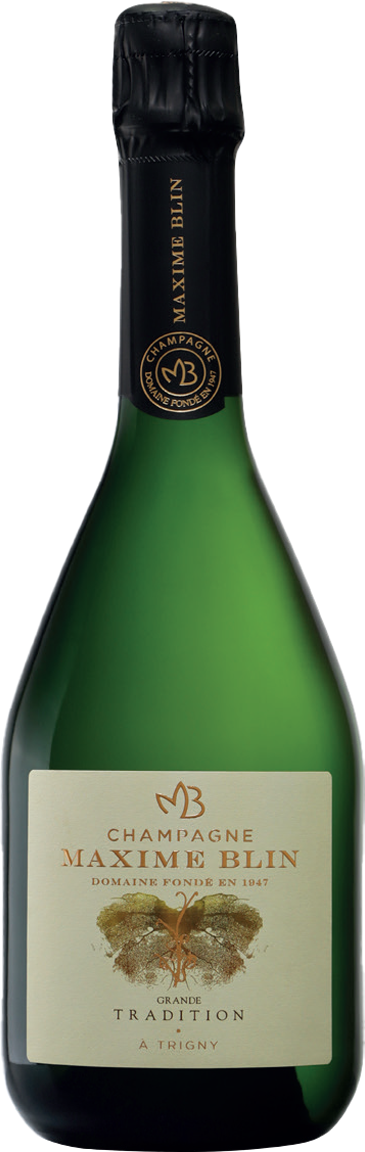
Champagne Brut 'Grande Tradition' Maxime BlinThe 'Grande Tradition' Brut Champagne from the French company Maxime Blin is a Champagne with a classic and refined style, reflecting the identity of the winery. This label is part of the 'Les Fondamentales' collection, a selection that brings together historical cuvées that fully embody the style of the Blin family, each focusing on a specific grape variety. In this particular case, the 'Grande Tradition' highlights the qualities of the Chardonnay cultivated in the Trigny area.The 'Grande Tradition' Maxime Blin Champagne comes from a blend of Chardonnay (90%) and Pinot Noir (10%) grapes grown under certified organic cultivation in the village of Trigny, within the Montagne de Reims area. Here, the vines enjoy excellent southern and south-eastern exposure and the sandy, clay-limestone soil matrix. Following the harvest, the grapes are subjected to a gentle pressing using a Coquard press, with the must thus obtained being transferred to stainless steel tanks for temperature-controlled alcoholic fermentation and subsequent complete malolactic fermentation. The vintage wine is then combined with 30% vins de réserve before bottle fermentation according to the Champenoise Method, combined with 36 months of maturation sur lattes. This is followed by dégorgement and final dosage as Extra Brut, with 4 g/l residual sugar.The 'Grande Tradition' Champagne Maxime Blin has a luminous straw yellow colour with a fine and persistent perlage. The aromatic bouquet expresses fragrant scents of citrus fruits and white flowers, surrounded by memories of bakery and mineral nuances. The taste is fresh, elegant and balanced, with a pleasant savoury trail that rests on a long citrus and mineral finish.57,00 £*Shipping: 48,00 £Secure redirect to the provider
-
Champagne Brut Grand Cru 'Tradition' GatinoisChampagne Gatinois Brut Grand Cru 'Tradition' reflects the structure and expressive depth of Champagne from Aÿ, a Grand Cru village located in the Vallée de la Marne, a few kilometres from Epernay. The village, where Pinot Noir reigns supreme with almost 90% of the entire vineyard area, is the largest of the Champagne villages with more than 4,000 inhabitants. Already famous in ancient times for the quality of its still wines, Aÿ is today established among the largest territories in all of Champagne for the cultivation of Pinot Noir.The Brut Grand Cru Champagne Gatinois 'Tradition' consists of a blend of Pinot Noir (80%) and Chardonnay (20%) grapes, varieties cultivated within the Grand Cru village of Aÿ on soils with a strong chalk component. In the cellar, the grapes undergo a soft pressing, followed by the alcoholic fermentation of the must and then the maturation of the vintage wine for a few months, which is then blended with 30% vin de reserve in the preparation of the sparkling wine base. This is followed by bottle fermentation according to the Champenoise Method, combined with at least 24-30 months of maturation on the lees in glass. This is followed by degorgement and final dosage as Brut, at 7 g/l residual sugar.The Champagne 'Tradition' Brut Grand Cru from the Gatinois sparkling wine company has a light, brilliant straw yellow colour with a refined perlage. Fresh aromas of pear, lime and white flowers emerge from the glass, supported by anelegant mineral timbre and deep hints of brioche and toasted hints. All complemented by the vinous note typical of Pinot Noir. Taste development endowed with excellent freshness and sapidity, with a good persistence in which the sensations previously perceived on the nose reappear.42,00 £*Shipping: 48,00 £Secure redirect to the provider



-
How can the altitude theorem and the cathetus theorem be transformed?
The altitude theorem and the cathetus theorem can be transformed by applying them in different geometric shapes and contexts. For example, the altitude theorem, which states that the length of the altitude of a triangle is inversely proportional to the length of the corresponding base, can be applied to various types of triangles and even extended to other polygons. Similarly, the cathetus theorem, which relates the lengths of the two perpendicular sides of a right triangle to the length of the hypotenuse, can be generalized to other right-angled shapes or even applied in three-dimensional geometry. By exploring different scenarios and shapes, these theorems can be adapted and transformed to solve a wide range of geometric problems. **
-
What are the altitude theorem and the cathetus theorem of Euclid?
The altitude theorem of Euclid states that in a right-angled triangle, the square of the length of the altitude drawn to the hypotenuse is equal to the product of the lengths of the two segments of the hypotenuse. This theorem is also known as the geometric mean theorem. The cathetus theorem of Euclid states that in a right-angled triangle, the square of the length of one of the catheti (the sides that form the right angle) is equal to the product of the lengths of the hypotenuse and the segment of the hypotenuse adjacent to that cathetus. This theorem is also known as the Pythagorean theorem. Both the altitude theorem and the cathetus theorem are fundamental principles in the study of geometry and are essential for understanding the properties of right-angled triangles. **
-
What is Thales' theorem?
Thales' theorem states that if A, B, and C are points on a circle where the line AC is a diameter, then the angle at B is a right angle. In other words, if a triangle is inscribed in a circle with one of its sides being the diameter of the circle, then that triangle is a right triangle. Thales' theorem is a fundamental result in geometry and is named after the ancient Greek mathematician Thales of Miletus. **
-
What is the formula for the altitude theorem and the cathetus theorem?
The formula for the altitude theorem is: \( a^2 = x \cdot (x + h) \), where \( a \) is the length of the hypotenuse, \( x \) is the length of one of the legs, and \( h \) is the length of the altitude drawn to the hypotenuse from the right angle. The formula for the cathetus theorem is: \( x \cdot y = h^2 \), where \( x \) and \( y \) are the lengths of the two legs of the right triangle, and \( h \) is the length of the altitude drawn to the hypotenuse from the right angle. **


What is the difference between proportionality theorem 1 and proportionality theorem 2?
Proportionality theorem 1 states that if a line is parallel to one side of a triangle and intersects the other two sides, it divides those sides proportionally. Proportionality theorem 2, on the other hand, states that if a line divides two sides of a triangle proportionally, then it is parallel to the third side of the triangle. In essence, theorem 1 deals with parallel lines and their proportional divisions within a triangle, while theorem 2 deals with proportional divisions and the parallelism of lines within a triangle. **
What is the proof for the altitude theorem and the cathetus theorem?
The altitude theorem states that in a right triangle, the altitude drawn from the right angle to the hypotenuse creates two similar triangles with the original triangle. This can be proven using the properties of similar triangles and the Pythagorean theorem. The cathetus theorem states that the two legs of a right triangle are proportional to the segments of the hypotenuse that they create when an altitude is drawn from the right angle. This can also be proven using the properties of similar triangles and the Pythagorean theorem. **
Top-Angebote
Products related to Theorem:
-
Tilt Theorem Build Pro Scooter (Chiseled) - BlackThe Tilt Theorem Build Stunt Scooter is crafted for riders at intermediate and advanced stages. This stunt scooter is brimming with attributes aimed at elevating your riding skills. Featuring a lightweight and robust aluminium 6000 Series deck, it is ideal for both park and street scenarios. Moreover, it comes fitted with a responsive fork, Tilt SCS compression, and a wheel configuration with a 120mm diameter, showcasing resilient aluminium cores and high-rebound urethane. The Tilt Theorem Build Stunt Scooter is engineered to deliver an optimal riding experience. Its concave deck shape combined with a T-shaped handlebar ensures significant control and comfort. With its elegant design and premium components, the Tilt Theorem Build Stunt Scooter is the optimal selection for those seeking to challenge their boundaries and elevate their riding prowess.319,95 £*Shipping: 0,00 £Secure redirect to the provider
-
What is the Pythagorean theorem and the altitude theorem?
The Pythagorean theorem states that in a right-angled triangle, the square of the length of the hypotenuse (the side opposite the right angle) is equal to the sum of the squares of the lengths of the other two sides. This can be expressed as a^2 + b^2 = c^2, where c is the length of the hypotenuse, and a and b are the lengths of the other two sides. The altitude theorem, also known as the geometric mean theorem, states that in a right-angled triangle, the altitude (the perpendicular line from the right angle to the hypotenuse) is the geometric mean between the two segments of the hypotenuse. This can be expressed as h^2 = p * q, where h is the length of the altitude, and p and q are the lengths of the two segments of the hypotenuse. **
-
What is the Pythagorean theorem and the cathetus theorem?
The Pythagorean theorem states that in a right-angled triangle, the square of the length of the hypotenuse (the side opposite the right angle) is equal to the sum of the squares of the lengths of the other two sides. In mathematical terms, it can be written as a^2 + b^2 = c^2, where c is the length of the hypotenuse, and a and b are the lengths of the other two sides, called catheti. The cathetus theorem, also known as the converse of the Pythagorean theorem, states that if the square of the length of the longest side of a triangle is equal to the sum of the squares of the lengths of the other two sides, then the triangle is a right-angled triangle. In other words, if a^2 + b^2 = c^2, then the triangle is a right-angled triangle, where c is the longest side (hypotenuse) and a and b are **
-
How can the altitude theorem and the cathetus theorem be transformed?
The altitude theorem and the cathetus theorem can be transformed by applying them in different geometric shapes and contexts. For example, the altitude theorem, which states that the length of the altitude of a triangle is inversely proportional to the length of the corresponding base, can be applied to various types of triangles and even extended to other polygons. Similarly, the cathetus theorem, which relates the lengths of the two perpendicular sides of a right triangle to the length of the hypotenuse, can be generalized to other right-angled shapes or even applied in three-dimensional geometry. By exploring different scenarios and shapes, these theorems can be adapted and transformed to solve a wide range of geometric problems. **
-
What are the altitude theorem and the cathetus theorem of Euclid?
The altitude theorem of Euclid states that in a right-angled triangle, the square of the length of the altitude drawn to the hypotenuse is equal to the product of the lengths of the two segments of the hypotenuse. This theorem is also known as the geometric mean theorem. The cathetus theorem of Euclid states that in a right-angled triangle, the square of the length of one of the catheti (the sides that form the right angle) is equal to the product of the lengths of the hypotenuse and the segment of the hypotenuse adjacent to that cathetus. This theorem is also known as the Pythagorean theorem. Both the altitude theorem and the cathetus theorem are fundamental principles in the study of geometry and are essential for understanding the properties of right-angled triangles. **
Similar search terms for Theorem
-
Champagne Brut 'Grande Tradition' Maxime BlinThe 'Grande Tradition' Brut Champagne from the French company Maxime Blin is a Champagne with a classic and refined style, reflecting the identity of the winery. This label is part of the 'Les Fondamentales' collection, a selection that brings together historical cuvées that fully embody the style of the Blin family, each focusing on a specific grape variety. In this particular case, the 'Grande Tradition' highlights the qualities of the Chardonnay cultivated in the Trigny area.The 'Grande Tradition' Maxime Blin Champagne comes from a blend of Chardonnay (90%) and Pinot Noir (10%) grapes grown under certified organic cultivation in the village of Trigny, within the Montagne de Reims area. Here, the vines enjoy excellent southern and south-eastern exposure and the sandy, clay-limestone soil matrix. Following the harvest, the grapes are subjected to a gentle pressing using a Coquard press, with the must thus obtained being transferred to stainless steel tanks for temperature-controlled alcoholic fermentation and subsequent complete malolactic fermentation. The vintage wine is then combined with 30% vins de réserve before bottle fermentation according to the Champenoise Method, combined with 36 months of maturation sur lattes. This is followed by dégorgement and final dosage as Extra Brut, with 4 g/l residual sugar.The 'Grande Tradition' Champagne Maxime Blin has a luminous straw yellow colour with a fine and persistent perlage. The aromatic bouquet expresses fragrant scents of citrus fruits and white flowers, surrounded by memories of bakery and mineral nuances. The taste is fresh, elegant and balanced, with a pleasant savoury trail that rests on a long citrus and mineral finish.57,00 £*Shipping: 48,00 £Secure redirect to the provider
-
Champagne Brut Grand Cru 'Tradition' GatinoisChampagne Gatinois Brut Grand Cru 'Tradition' reflects the structure and expressive depth of Champagne from Aÿ, a Grand Cru village located in the Vallée de la Marne, a few kilometres from Epernay. The village, where Pinot Noir reigns supreme with almost 90% of the entire vineyard area, is the largest of the Champagne villages with more than 4,000 inhabitants. Already famous in ancient times for the quality of its still wines, Aÿ is today established among the largest territories in all of Champagne for the cultivation of Pinot Noir.The Brut Grand Cru Champagne Gatinois 'Tradition' consists of a blend of Pinot Noir (80%) and Chardonnay (20%) grapes, varieties cultivated within the Grand Cru village of Aÿ on soils with a strong chalk component. In the cellar, the grapes undergo a soft pressing, followed by the alcoholic fermentation of the must and then the maturation of the vintage wine for a few months, which is then blended with 30% vin de reserve in the preparation of the sparkling wine base. This is followed by bottle fermentation according to the Champenoise Method, combined with at least 24-30 months of maturation on the lees in glass. This is followed by degorgement and final dosage as Brut, at 7 g/l residual sugar.The Champagne 'Tradition' Brut Grand Cru from the Gatinois sparkling wine company has a light, brilliant straw yellow colour with a refined perlage. Fresh aromas of pear, lime and white flowers emerge from the glass, supported by anelegant mineral timbre and deep hints of brioche and toasted hints. All complemented by the vinous note typical of Pinot Noir. Taste development endowed with excellent freshness and sapidity, with a good persistence in which the sensations previously perceived on the nose reappear.42,00 £*Shipping: 48,00 £Secure redirect to the provider
-
What is Thales' theorem?
Thales' theorem states that if A, B, and C are points on a circle where the line AC is a diameter, then the angle at B is a right angle. In other words, if a triangle is inscribed in a circle with one of its sides being the diameter of the circle, then that triangle is a right triangle. Thales' theorem is a fundamental result in geometry and is named after the ancient Greek mathematician Thales of Miletus. **
-
What is the formula for the altitude theorem and the cathetus theorem?
The formula for the altitude theorem is: \( a^2 = x \cdot (x + h) \), where \( a \) is the length of the hypotenuse, \( x \) is the length of one of the legs, and \( h \) is the length of the altitude drawn to the hypotenuse from the right angle. The formula for the cathetus theorem is: \( x \cdot y = h^2 \), where \( x \) and \( y \) are the lengths of the two legs of the right triangle, and \( h \) is the length of the altitude drawn to the hypotenuse from the right angle. **
-
What is the difference between proportionality theorem 1 and proportionality theorem 2?
Proportionality theorem 1 states that if a line is parallel to one side of a triangle and intersects the other two sides, it divides those sides proportionally. Proportionality theorem 2, on the other hand, states that if a line divides two sides of a triangle proportionally, then it is parallel to the third side of the triangle. In essence, theorem 1 deals with parallel lines and their proportional divisions within a triangle, while theorem 2 deals with proportional divisions and the parallelism of lines within a triangle. **
-
What is the proof for the altitude theorem and the cathetus theorem?
The altitude theorem states that in a right triangle, the altitude drawn from the right angle to the hypotenuse creates two similar triangles with the original triangle. This can be proven using the properties of similar triangles and the Pythagorean theorem. The cathetus theorem states that the two legs of a right triangle are proportional to the segments of the hypotenuse that they create when an altitude is drawn from the right angle. This can also be proven using the properties of similar triangles and the Pythagorean theorem. **
* All prices are inclusive of VAT and, if applicable, plus shipping costs. The offer information is based on the details provided by the respective shop and is updated through automated processes. Real-time updates do not occur, so deviations can occur in individual cases. ** Note: Parts of this content were created by AI.